Kinetic Silk | By ArtLoft Editorial |
Can Wall Art Move Without Electricity?
Movement can come from balance, touch, air and the viewer rather than a plug, motor or programmed sequence.
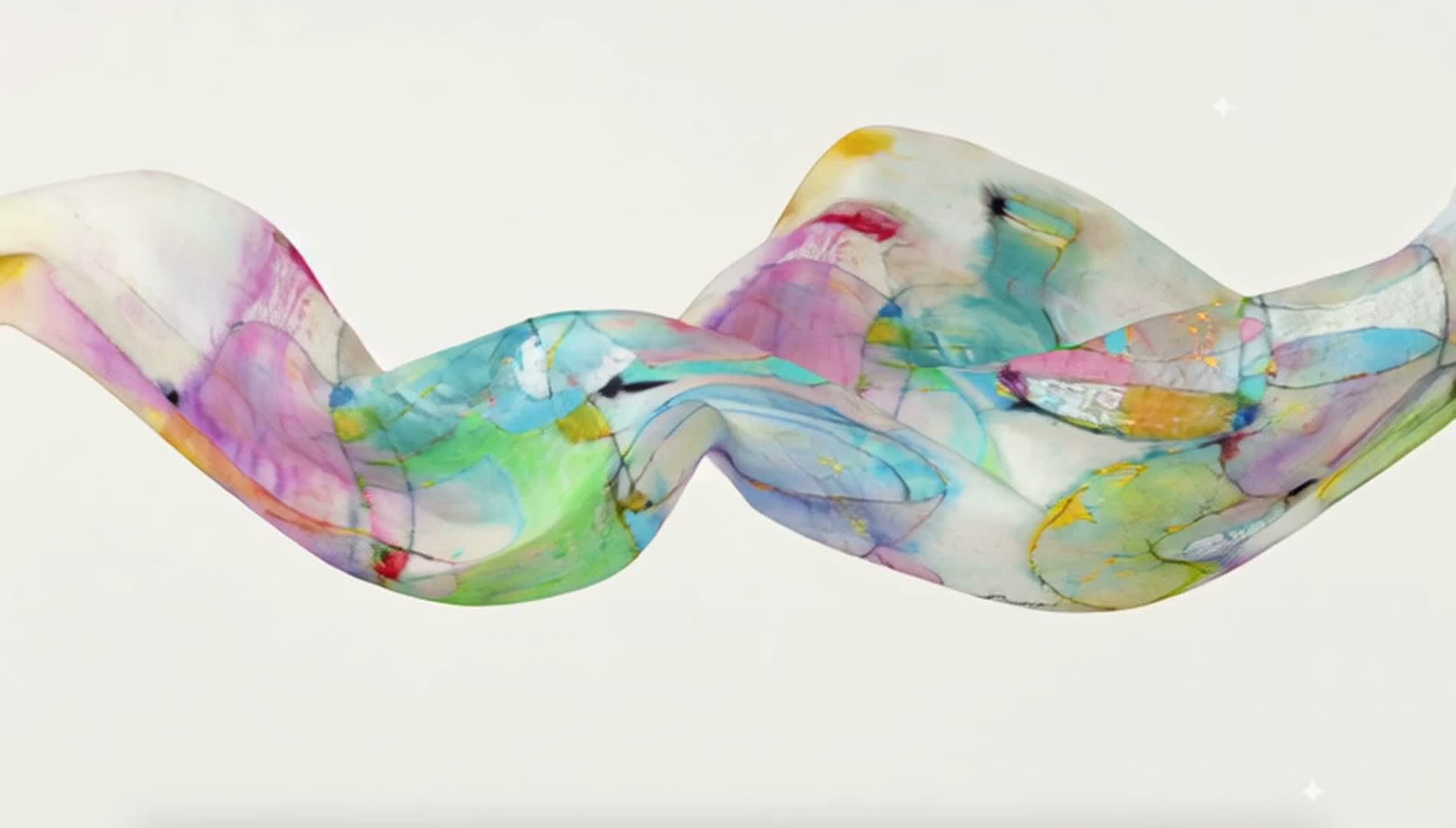
Yes, wall art can move without power
Electricity is only one way to create movement. A wall-based artwork can change through balance, gravity, touch, ambient air or the movement of the viewer. A suspended element may turn and settle. A lightweight textile surface may shift when someone crosses the room. A layered or reflective work may appear to change even though its parts remain fixed.
The useful distinction is between actual physical motion and perceived motion. Both can be kinetic experiences, but they create different installation and ownership questions. A collector should ask what initiates the change, whether it repeats, what the work looks like at rest and what conditions the room must provide.
Balance and gravity can produce movement
Mobiles and other balanced forms use weight, suspension and gravity. Their elements are arranged so a small force can change position without requiring a powered mechanism. The work may move after a touch or air current, then return toward a resting relationship. The apparent simplicity depends on careful distribution of weight and a stable support.
These works need a documented movement envelope. A wall armature or ceiling point must support the actual load, and nearby surfaces must remain outside the expected reach of moving parts. Qualified installation review matters because the absence of wiring does not remove structural responsibility.
Touch can activate a work
Some works invite a person to turn, pull, fold or release an element. The energy comes from the viewer rather than an electrical supply. This can create an intimate relationship with the object, but it also changes the care plan. The artist or gallery should explain who may interact, how much force is appropriate and how the work returns to rest.
Interactive art should not rely on guesswork. A visible invitation to touch can be misunderstood if the permitted action is narrow. A private residence, gallery and public lobby each create different levels of supervision. The interaction plan belongs in the specification, not in an informal explanation delivered only on installation day.
Ambient air can move lightweight material
Air is always present, although it is not always moving enough to see. Doors, people, ventilation and temperature differences can create currents. A lightweight material with sufficient surface area may register those changes. The result can be a turn, lift, wave, tremor or slow settling motion.
This response is not programmed. It may be visible at one moment and absent at another. That variability is part of air-responsive art, but it should remain within the intended behavior of the work. Strong fan output, open windows or a forceful supply vent are not proof of a better installation. They may create unnecessary stress, contact or an unsuitable care condition.
The viewer can create optical movement
Power-free movement can also be perceptual. A work made with repeated lines, layered surfaces, reflectivity or changing angles may reorganize visually as a person passes. The object remains still while the viewer's position changes the image. This is often associated with optical and kinetic practices, and it can make a corridor or approach route part of the experience.
The location should be tested from actual viewpoints. A direct product photograph may fail to show the effect, while a dramatic oblique photograph may exaggerate what most viewers will see. Record standing, seated and passing views before deciding that a wall supports the intended change.
No electricity changes the maintenance plan
A power-free artwork has no controller, motor or programmed sequence to service. That can reduce certain mechanical requirements, but it does not make the work maintenance-free. Suspension points, wall hardware, clearances, textile condition, dust, handling and storage may still require regular attention.
Maintenance should follow the object rather than a generic category. A balanced metal element and a responsive silk surface have different needs. Ask for the materials, inspection points, cleaning restrictions, approved handling method and the person to contact if the work begins to behave differently from its documented condition.
The resting state still matters
Art that moves is often introduced through its most animated moment. A collector will live with every other moment too. The work should remain visually complete when the room is quiet. Composition, proportion, surface and relation to the wall should not disappear when movement stops.
Watch a work long enough to see it settle. If it has been activated for a demonstration, ask to see the conditions before and after. A good presentation should not require concealed fans, continuous touch or a carefully cropped video to make the object convincing.
Placement determines whether movement feels intentional
Map doors, windows, vents, curtains, fans, walking routes and nearby furniture. Observe the wall with mechanical systems operating normally. Note whether a passing person creates a brief response or whether the location produces constant agitation. The aim is to understand the room, not to force the work to move as much as possible.
Light deserves a separate map. It can make motion more visible through changing reflection and shadow, but exposure can affect sensitive materials over time. Direct sun should not be used as a theatrical device. Material-specific guidance and specialist review should determine whether the proposed light condition is appropriate.
How Kinetic Silk moves
Kinetic Silk Art does not use a motor, controller, screen or electronic animation. ArtLoft's approved description is that movement comes from silk, ambient air and changing light. ArtSoie is the silk artwork. Veatro is the patent-pending stainless-steel display and release system. Together, in the documented configuration, they create the complete Kinetic Silk experience.
Veatro supports the relationship between the silk and wall. It does not run a motion sequence. A compatible ArtSoie edition can respond when the room changes and may remain almost still when the air is quiet. This makes Kinetic Silk an air-responsive textile form rather than a motorized kinetic installation.
Responsive does not mean uncontrolled
A light textile surface still needs a disciplined location. Strong vents, wet areas, cooking zones, open windows and busy paths may be unsuitable. The proposed wall should allow adequate clearance and supervised access for any release, return or condition check. Object-specific guidance matters because material, construction and use can vary.
A movement study should record ordinary conditions. Note whether air conditioning, doors or windows were operating. Film from a fixed point as well as a close view. Include a quiet interval. This evidence is more useful than a promise that the artwork will always move in the same way.
Questions to ask before choosing
Ask whether the movement is physical or optical, what supplies the energy and whether the work needs human interaction. Request dimensions at rest and in motion. Confirm the support, clearance, care, inspection and storage requirements. For responsive textiles, ask about light, dust, handling and the intended relationship with airflow.
Then ask the artistic question: what does movement add? If the work becomes less convincing when still, motion may be functioning as spectacle. If the object remains complete and movement opens another reading, the kinetic behavior belongs more deeply to the work.
Power-free movement can be quiet and exacting
Wall art does not need electricity to change over time. It can use the oldest forces in a room: gravity, air, touch, light and the movement of the viewer. The engineering may be simple or highly refined, but the result should never be confused with an absence of responsibility.
The strongest power-free work joins material, installation and room into one clear experience. It moves when conditions allow, rests without losing presence and arrives with records another keeper can understand. That is the difference between art that merely moves and movement that belongs to the art.
Sources and editorial notes
ArtLoft Kinetic Silk movement observation and Veatro product records, reviewed July 2026
ArtLoft Public Claim Registry, reviewed July 2026
Museum of Modern Art: Kinetic art Open source
Canadian Conservation Institute: Textiles and the Environment Open source
Reviewed by ArtLoft Editorial. Materially updated 2026-07-13. Read the editorial policy.