Kinetic Silk | By ArtLoft Editorial |
What Is Moving Wall Art? Motorized, Suspended and Air-Responsive Forms
A practical comparison of wall art moved by mechanisms, touch, suspension, viewpoint or ambient air.
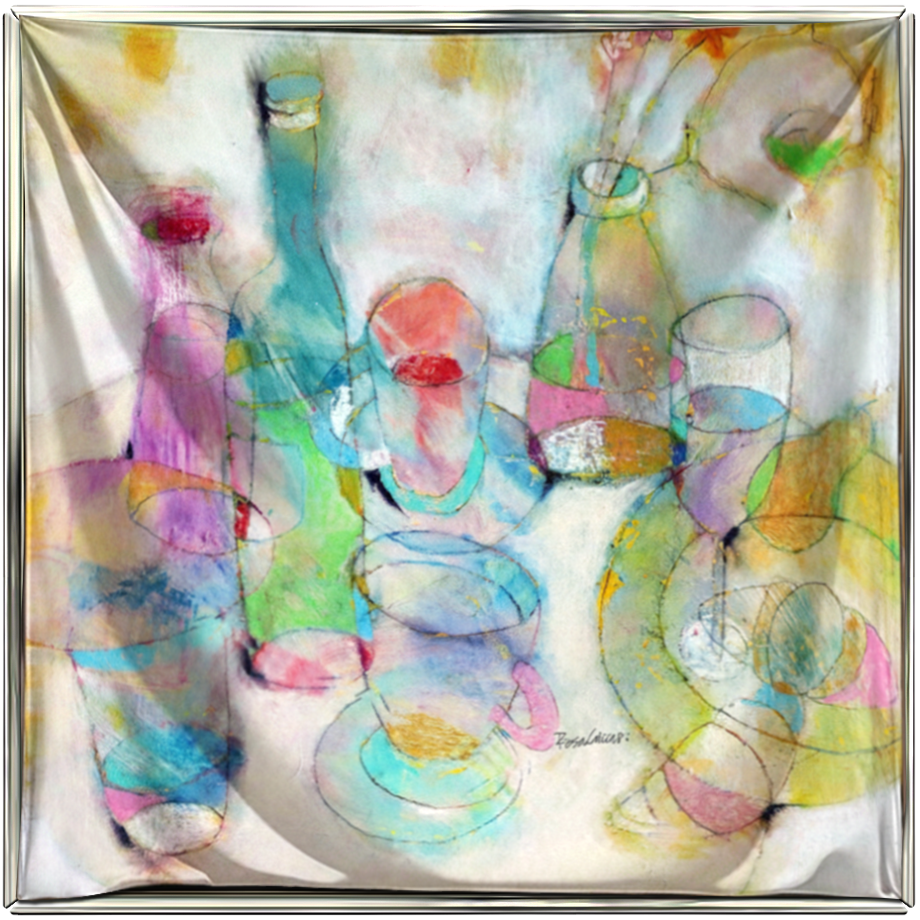
Moving wall art is a behavior, not a single look
Moving wall art is artwork connected to a wall or wall zone whose appearance changes through actual motion, an animated surface or the viewer's changing position. Some works contain motors. Some are moved by touch. Some are suspended so balance and air can act on them. Others remain physically fixed but create an optical impression of movement as the viewer walks past.
The category is broad because movement can enter an artwork in several ways. A useful definition should therefore name the source of change. Saying that a work is kinetic or moving is only the beginning. A collector or designer still needs to know what initiates motion, whether the sequence repeats, how the work behaves at rest and what the room must provide.
Motorized wall art
Motorized wall art uses a powered mechanism to turn, lift, oscillate, open, close or otherwise control part of the work. The motor may produce a repeating sequence or respond to a programmed input. This can give the artist precise control over timing, rhythm and recurrence. It can also make mechanical sound, power access and servicing part of the ownership plan.
Before specifying a powered work, ask where the electricity comes from, what remains visible, how the work is switched or controlled and what happens during a power interruption. Request the operating cycle, clearance, heat and sound information, replacement-part plan and service contact. The movement may be central to the art, but the mechanism still has a practical life that should be documented.
Manually activated and interactive forms
Some moving wall works wait for a person. A hand crank, pull, touch point or other interaction initiates the movement. Here the viewer becomes part of the sequence. The artistic question includes permission: is interaction expected from anyone, supervised by a host or limited to trained staff? A work designed for a museum setting may not suit an unsupervised residential passage.
The specification should identify force, reach, accessibility, pinch or contact zones and the procedure for returning the work to rest. These questions do not reduce the work to equipment. They protect the intended encounter. If the work depends on human participation, confusion about how to use it can change both the experience and the risk.
Suspended moving art
Suspended work may hang from a wall armature, ceiling point or combination of supports. Balance, gravity and air can allow elements to turn or shift. Mobiles are the familiar reference, but suspended art can also use textile, paper, wire, wood, metal or mixed media. The visual composition often includes negative space, shadow and the distance between moving parts.
Installation is especially important because the work needs a defined movement envelope. A drawing should identify support points, dimensions at rest, maximum expected reach and nearby surfaces. The support structure and building attachment must be reviewed by the appropriate qualified people. A pleasing sense of lightness should never depend on vague assumptions about hardware or clearance.
Optical and viewpoint-dependent movement
Not every work that appears to move has moving parts. Repeated lines, reflective surfaces, layered grids and shifting viewpoints can create optical change as a person crosses the room. In this form, the viewer supplies the movement. The object may remain fixed while its visual relationships reorganize with distance and angle.
These works can be highly sensitive to sightline and lighting. A photograph taken directly in front may flatten the effect. A designer should test the approach route, seated views, reflections and artificial lighting positions. The strongest location may be where people naturally pass, not where the wall appears most symmetrical in a plan.
Air-responsive wall art
Air-responsive wall art lets ambient air act on a material or balanced element. The source may be a passing person, an opening door or the ordinary operation of the room. Unlike a motorized work, the sequence is not fixed. The work may be still, shift briefly and settle without completing a repeated cycle.
This does not mean that any draft is desirable. Strong vents, open windows, busy circulation or repeated contact may create unsuitable conditions. The correct placement is the one that supports the intended degree of response while respecting the material. For a textile surface, light, dust, handling and storage remain part of care even when there is no motor to maintain.
Compare the forms by six decisions
First, identify the source of movement: electricity, touch, suspension, viewpoint or ambient air. Second, decide how much control the artist intends. Third, observe the resting state. Fourth, define the movement envelope and clearance. Fifth, document maintenance and care. Sixth, understand what the room contributes through power, light, airflow, access and circulation.
These decisions are more useful than asking which form is best. A precise motorized sequence may belong to one artistic idea. A nearly still textile surface may belong to another. The right choice depends on whether the behavior, material and room support the work's meaning over time.
Sound, rhythm and attention
Movement changes the emotional temperature of a room. A repeating mechanism can create expectation and rhythm. A suspended piece may feel balanced and open. Optical change can reward walking and return visits. Air-responsive material can make a room feel attentive to small conditions. None of these effects is universal, and each can become distracting when badly placed.
Observe the work for longer than a demonstration clip. Listen from the intended distance. Watch it through a complete operating cycle if it has one. Then see it at rest. A collector should know whether attention comes from the artwork itself or from the novelty of motion. The answer becomes clearer after the first surprise has passed.
Textile surfaces create a distinct form of movement
Textile movement is rarely the same as the movement of a rigid object. Drape, edge behavior, temporary folds, shadow and reflection can change together. The image remains present, but the surface carrying it becomes more legible. This gives textile art a way to occupy the space between a fixed wall image and a freestanding kinetic sculpture.
Contemporary textile art already challenges the old division between fine art and craft. Adding controlled release or material response raises further questions about display, handling and access. Those questions should be documented rather than hidden behind a broad term such as living art or dynamic décor.
Where Kinetic Silk Art belongs
Kinetic Silk Art is ArtLoft's complete experience formed when an ArtSoie silk edition is displayed in Veatro. The silk responds to ambient air and changing light without a motor or electronic animation. Veatro establishes the relationship between the silk and wall and allows the compatible ArtSoie edition to be released according to its documented use.
Within the moving-wall-art landscape, this is an air-responsive textile form. It is not a mobile, motorized installation or generic scarf frame. The distinction gives a searcher a path from a familiar question to a specific category without pretending that every moving artwork works in the same way.
Choose the movement that belongs to the room
A room does not need the most movement it can contain. It needs a work whose behavior remains convincing through daily life. Begin with the artistic idea, then test mechanism or material, resting state, clearance, care and service. If any of those remain unknown, keep the page or proposal in review.
Moving wall art is successful when movement deepens the encounter instead of competing with it. The source of motion becomes part of the work's identity, the room supports that identity and the collector understands what must be preserved. That is the standard against which every form should be compared.
Sources and editorial notes
ArtLoft Kinetic Silk product and movement records, reviewed July 2026
ArtLoft Public Claim Registry, reviewed July 2026
Museum of Modern Art: Kinetic art Open source
Museum of Modern Art: Woven Histories Open source
Reviewed by ArtLoft Editorial. Materially updated 2026-07-13. Read the editorial policy.