Kinetic Silk | By ArtLoft Editorial |
Textile Wall Art vs Framed Print vs Tapestry: What Changes?
The categories overlap, but material, construction and the intended life of the object change the collecting decision.
Start with the overlap
Textile wall art and tapestry are not opposing categories. A tapestry is a form of textile art, usually created through weaving a design into the structure of the cloth. Textile wall art is the wider field. It can include tapestry, embroidery, quilting, fiber sculpture, printed or painted textiles, suspended cloth and mixed-media work in which fiber is central.
A framed print is a different construction. The image is commonly made on paper or another relatively flat substrate and presented within a frame, sometimes behind glazing. Prints can be original works made through a printmaking process, photographic editions or reproductions. The word print alone does not establish artistic quality, rarity or method. The object record must do that work.
The image and the material have different relationships
In a framed print, the substrate carries the image, but the viewer may first notice line, color, photographic detail or the impression created by a printing process. Paper texture and ink can be crucial, yet the framed presentation often encourages a front-facing reading. The image appears bounded by the frame and mat or by the edge of the sheet.
In textile art, material behavior is often harder to separate from the image. Weave, fiber, pile, edge, drape, transparency, stitch and relief may be part of the composition. The surface can receive light unevenly and change from different angles. Even a textile carrying a printed image can create a distinct experience when flexibility and reflection remain visible.
A tapestry is made through structure
Traditional tapestry is generally weft-faced weaving in which colored weft threads build the image as the textile is formed. Contemporary artists may extend, interrupt or combine that method with other materials and processes. The important point is that a tapestry is not simply a picture transferred onto finished cloth. Image and textile structure emerge together.
This gives tapestry a particular material density and edge condition. It may hang freely, use a sleeve and rod, attach to a support or require a conservation-informed mounting method. Scale, weight and construction influence how it meets the wall. The installation should be designed for the actual object rather than copied from a generic wall-hanging tutorial.
Framing changes the viewing condition
A frame can define separation, protect edges, support a sheet and, when glazing is present, create a barrier from direct handling and dust. The exact benefits depend on materials, spacing, backing, glazing, sealing and environmental conditions. A frame is not automatically archival, and the word museum-quality should never substitute for a component list and specialist judgment.
Glazing can also introduce reflection and physical distance. That may suit a print whose surface should remain protected and flat. It may change the intended reading of a textile that depends on drape, shadow or open movement. The decision is not frame versus no frame in the abstract. It is whether the presentation supports the artist's intended object and the collector's care responsibilities.
Textile art can project into the room
Textile work may remain close to the wall, but it can also form relief, move at the edge, cast changing shadows or occupy space between wall and viewer. This can soften the visual relationship with hard architectural materials without turning the work into decoration. The effect comes from the actual object: fiber, scale, depth, color and installation.
That projection creates practical questions. How far does the work extend? Can people brush against it? Does housekeeping have clear instructions? Is the wall exposed to direct sun, moisture or forceful airflow? Does the object need access for condition checks or rotation? These questions should be answered before the work is approved for the room.
Movement is possible, but not automatic
Some textile art is fixed and intended to remain visually stable. Some hangs freely enough for small edge movement. Some is designed as a responsive surface. Calling an object textile art does not prove that it should move, be touched, be worn or remain unenclosed. Those behaviors must be supported by the artist's intent, construction and display system.
Air-responsive textile art makes ambient air and changing light part of the experience. A lightweight surface can shift, settle and return light differently as its angle changes. This places movement inside the viewing condition, but it also makes airflow and clearance part of the specification. Stronger movement is not automatically better movement.
Compare care by material, not prestige
Paper, ink, dyes, fibers, stitching, metal and glazing respond differently to light, humidity, pollutants, dust and handling. A framed print may need appropriate hinging, backing and glazing. A tapestry may need weight distribution and support suited to its construction. A responsive silk work may require attention to light, airflow, handling, release and storage.
Conservation guidance for textiles emphasizes the environment around the object. That principle should shape the comparison without producing false certainty. No display format is universally safe. Ask what the actual materials are, how the work was made, what contact method is used and which conditions the artist, gallery or specialist has approved.
Documentation changes the collecting decision
For a framed print, record the artist, title, date, process, paper or substrate, edition, printer where relevant, dimensions, frame components and condition. For tapestry or other textile work, add fibers, weave or construction, support, hanging method and care. If a work includes a separate display system, identify each component and how they relate.
The certificate should match the object rather than describe a category. Edition number, dimensions and material wording should remain consistent across certificate, invoice, condition images and gallery record. A beautiful wall presentation cannot compensate for uncertain authorship or vague object data.
Room character is not a substitute for object quality
Framed prints can bring precision, intimacy and graphic clarity. Tapestry can bring structure, scale and the depth of woven color. Other textile works can introduce relief, transparency, flexibility or movement. These are possibilities, not guaranteed emotional effects. The work still needs a convincing image, material logic and relationship with its intended wall.
View from the normal approach and the longest distance in the room. Then move close enough to inspect surface and edge. Check the work in morning and evening light. If movement matters, observe it under ordinary conditions and at rest. The decision should survive more than one styled photograph.
Where Kinetic Silk differs
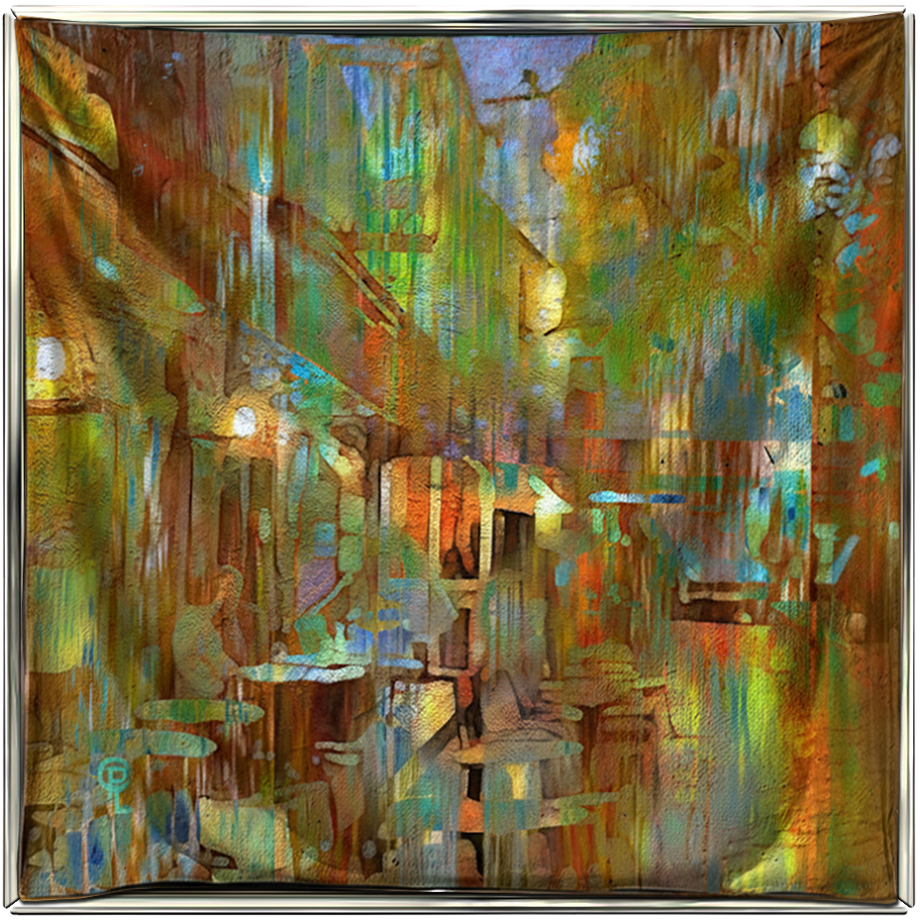
ArtLoft uses Kinetic Silk Art for the complete configuration in which an ArtSoie silk edition is displayed in Veatro. ArtSoie is a numbered artwork on 100% mulberry silk when the specific edition record confirms those details. Veatro is the patent-pending stainless-steel display and release system. Movement comes from silk, ambient air and changing light, without a motor or electronic animation.
This differs from a conventional framed print because the image is carried on a flexible silk surface and presented without permanent enclosure. It differs from tapestry because the image is not defined as a woven tapestry structure. It also differs from generic textile wall art because ArtSoie, Veatro and the complete Kinetic Silk configuration have distinct documented identities.
Choose the work, then the category
Do not begin with a belief that one medium is more serious, luxurious or collectible than another. Begin with the artwork. Look at authorship, process, material, condition, edition and the quality of the image. Then examine how the display method supports the work and whether the room can meet its care requirements.
The category becomes useful after those facts are clear. A framed print, tapestry and responsive silk artwork can each be the right acquisition. What changes is the relationship among image, material, wall, room and keeper. That relationship is the real subject of the comparison.
Sources and editorial notes
ArtLoft product, artist, edition and installation records, reviewed July 2026
ArtLoft Public Claim Registry, reviewed July 2026
Museum of Modern Art: Woven Histories Open source
Canadian Conservation Institute: Textiles and the Environment Open source
Reviewed by ArtLoft Editorial. Materially updated 2026-07-13. Read the editorial policy.