Silk Scarf Collectors | By ArtLoft Editorial |
How to Display and Rotate Hermès Scarves on a Wall Without Reframing
A collector's operating rhythm for moving silk between wall, storage and wardrobe without rebuilding the display each time.
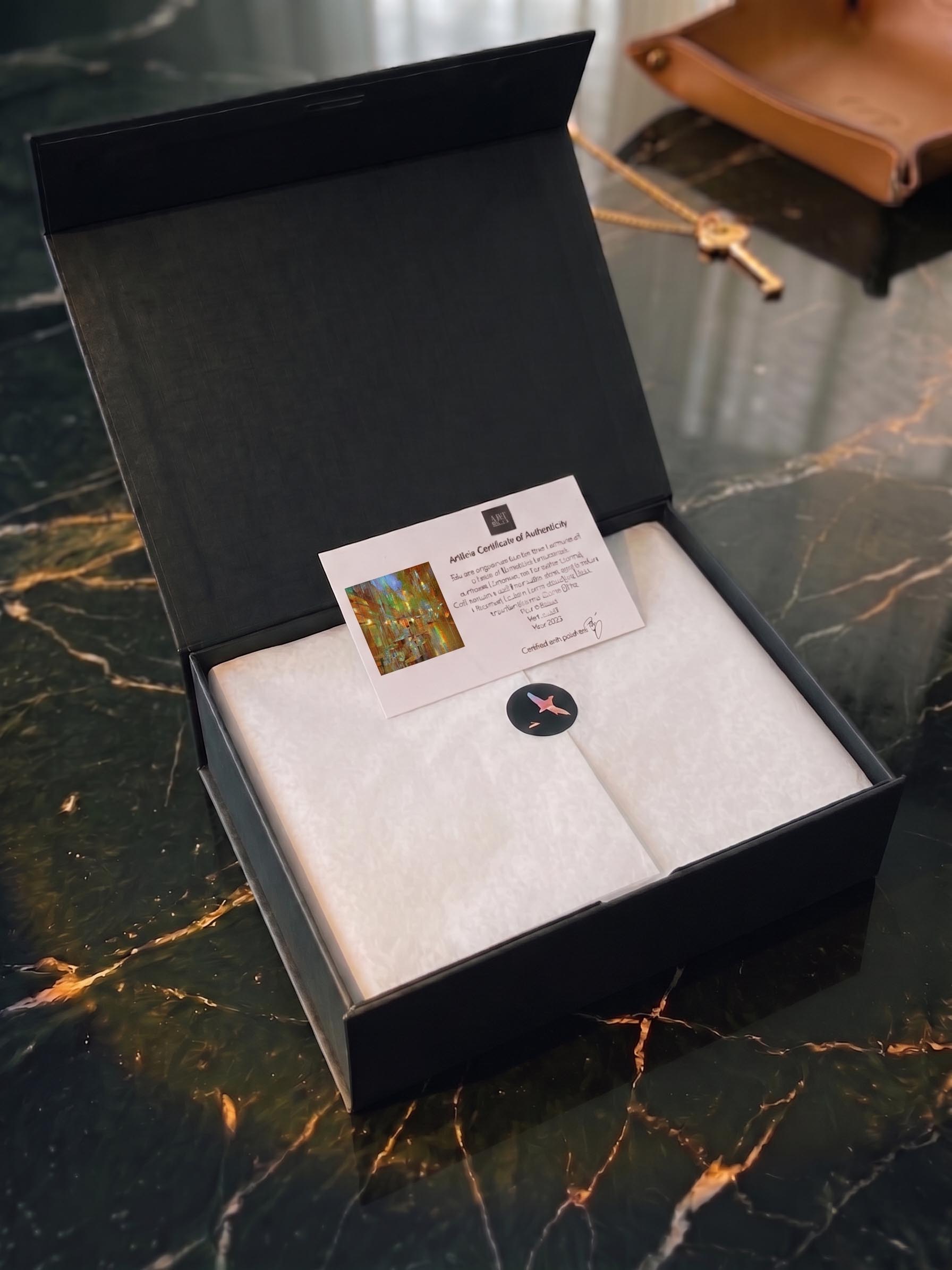
A wall rotation begins in the archive
A collector may own ten scarves and have space to display one. That is not a framing problem. It is a rotation problem. The wall needs a stable system, while the collection needs a record that remembers what was shown, for how long and in what condition.
Begin with a simple object list. Record the maker, design, format, colorway, purchase documents, box, current condition and storage location. Add one flat photograph and details of the corners and hand-rolled edge. A rotation becomes easier when the collection can be seen as a whole rather than rediscovered box by box.
Choose the first scarf conservatively
Do not begin with the most fragile, repaired or emotionally irreplaceable scarf. Choose one in sound condition whose dimensions and construction can be assessed clearly. The first display period should test the wall, the handling routine and the household's ability to manage release calmly.
Vintage age does not automatically make a scarf unsuitable, and a newer scarf is not automatically robust. Look for pulls, stains, weakened corners, distortion, earlier repairs and decoration that changes thickness. When in doubt, ask a textile conservator before the scarf goes near a wall system.
Prepare the outgoing scarf's storage before touching the display
Clear a clean surface. Remove jewelry that may catch. Set out the scarf's approved storage materials and identify where the released silk will rest. A surprising amount of poor handling begins after removal, when someone realizes there is nowhere safe to put the object.
Photograph the scarf while it is still installed, then record the same corners and contact areas after release. Follow the demonstrated sequence for the specific system. If the silk resists, distorts or behaves differently from the demonstration, stop. Rotation should never become a contest between the collector and the hardware.
Where Veatro enters the rotation
Veatro is ArtLoft's patent-pending stainless-steel display and release system. Current ArtLoft guidance allows it to be considered for a compatible silk square without adhesive, stitching, pins or permanent enclosure. The value for a rotation is practical: the wall relationship can remain while the displayed scarf changes.
That convenience has a boundary. ArtLoft should review each actual scarf for condition, dimensions, construction and contact points before confirming compatibility. A Carré label or nominal size is not approval. One scarf may work while another from the same collection requires a different decision.
Keep the wall constant and the records moving
Repeated rotation should not mean repeated improvisation. Record the wall hardware, level, normal lighting and clearances after installation. Keep the release area free of furniture that forces the silk to pass over rough surfaces or sharp corners.
The outgoing scarf's record receives a display end date and condition note. The incoming scarf receives a baseline photograph and start date. This may sound formal for a private home, but the routine can take minutes once it exists. It replaces memory with evidence.
Treat light as a collection-wide budget
The Canadian Conservation Institute explains that light damage is cumulative and irreversible. Rotation spreads exposure across several scarves, but it does not make the exposure disappear. A scarf that spends three months on the wall has still received three months of room light.
Record the season and wall conditions. Direct sun, strong spotlights and bright reflected light deserve particular attention. The Smithsonian notes that museums rotate sensitive objects off display so they can rest in dark, stable storage. A private collector does not need to imitate a museum schedule, but the principle is useful: display time is a choice, not a neutral state.
Decide whether wear belongs in the same cycle
Some scarves move from box to wall and back. Others return to the body. If wear is part of the plan, add a condition glance and maker-guided care before the scarf returns to display or storage. Cosmetics, rain, perfume, knots and cleaning create a different history from wall exposure.
Do not make the rotation so complicated that it never happens. A date, a few photographs and one short note are enough to make the record useful. The purpose is to notice change and keep the collection intelligible, not to turn private ownership into museum bureaucracy.
Conventional framing answers a different routine
Custom framing can create a stable, enclosed presentation with mounting and glazing designed around one scarf. It may reduce casual contact and dust when properly specified. It also makes frequent rotation more involved because the frame must be opened and the mounted textile released.
A reusable wall system suits a collector who values access and changing the room with the collection. That access transfers more responsibility to the owner. The decision is not whether framing or release is universally better. It is whether the chosen routine will actually be followed.
ArtSoie makes rotation part of an artwork's intended life
Hermès scarves enter the wall from fashion and collecting. ArtSoie enters as an artist-authored limited edition on mulberry silk. When a specified ArtSoie is installed in Veatro, ArtLoft calls the complete work Kinetic Silk Art.
For an ArtSoie edition whose documentation permits release or wear, movement between wall, storage and body belongs to the intended experience. The artist, title, edition number and certificate remain attached to that identity throughout the cycle. A Hermès scarf displayed in Veatro retains its own separate product and collecting history.
Run one complete rotation before expanding the system
Test the full sequence with one approved scarf leaving and another approved scarf entering. Include storage, photography, release, condition review and return to the wall. Notice where hands become awkward, where the silk needs support and whether the room gives enough space to work without rushing.
Only after that rehearsal should the collector treat rotation as established. The goal is a wall that changes without asking the collection to absorb careless handling each time.
Keep the rotation log small enough to use
Six fields are enough for a useful record: scarf identifier, display start date, display end date, wall conditions, condition before release and condition after return. Add a photograph when something changes. The log can live beside the collection inventory rather than becoming a separate archive nobody opens.
Over time, the record answers practical questions. Which scarves have spent the longest time in bright light? Which ones need a conservator's opinion? Which display positions create dust or awkward handling? The point is not paperwork for its own sake. It is a quiet way to notice the collection before a small problem becomes a repair.
ArtLoft and Veatro are independent of Hermès and are not sponsored, endorsed or affiliated with Hermès. Hermès remains the owner of its trademarks and scarf designs.
Sources and editorial notes
ArtLoft Veatro product, compatibility and installation records, reviewed July 2026
ArtLoft Public Claim Registry, reviewed July 2026
Hermès: Products, care and repair FAQ Open source
Hermès USA: Scarf display system Open source
Canadian Conservation Institute: Basic care of textiles Open source
Canadian Conservation Institute: Textiles and the Environment Open source
Smithsonian National Museum of American History: Collections Care Open source
Reviewed by ArtLoft Editorial. Materially updated 2026-07-21. Read the editorial policy.