Silk Scarf Collectors | By ArtLoft Editorial |
Hermès Scarf Display System vs Veatro: What Changes for a Collector?
Two independent ways to place silk on a wall, compared through the questions a collector will live with after installation.
Start with what each maker actually describes
Hermès calls its product a wall hanging system designed for silk scarves. The official page reviewed in July 2026 lists five Clou de Selle magnets, four screws and four cables. That is a specific product with its own installation and visual language. The hardware remains recognizably Hermès.
Veatro is a separate ArtLoft product. Current ArtLoft records describe it as a patent-pending stainless-steel display and release system made to hold a compatible silk square without adhesive, stitching, pins or permanent enclosure. Its outline reads more like an architectural frame. The silk remains the active surface inside it.
Those descriptions tell us what the products intend to do. They do not settle which one belongs with a particular scarf.
Compare the contact points before the appearance
A wall photograph can make two systems look simpler than they are. The collector should ask what touches the silk, where the weight is carried and what happens at the hand-rolled edges. Request current installation instructions and a live demonstration with the actual scarf whenever possible.
Hermès publicly identifies magnets, screws and cables as parts of its system. ArtLoft should identify every Veatro contact point during its compatibility review without exposing protected engineering detail. If either demonstration moves too quickly to show the corners, edges and release, slow it down. The scarf deserves more attention than the hardware reveal.
The systems occupy the wall differently
The Hermès system places house-coded hardware around the scarf. For some collectors, that is exactly the appeal. The scarf and display belong to the same maison, and the Clou de Selle detail becomes part of the room.
Veatro uses a stainless-steel perimeter. Its presence is quieter in branding but stronger in architecture. The frame gives the silk a defined field while keeping the surface open to reflected light and ordinary changes in air. When Veatro holds a compatible third-party scarf, that scarf remains a third-party scarf. It does not become ArtSoie or complete Kinetic Silk.
Release matters when a scarf will return to the wardrobe
Before choosing a system, decide how often the scarf is likely to leave the wall. A collector who changes the display by season needs a repeatable removal routine, a clean surface nearby and prepared storage. Someone who wants one scarf to remain composed for a long period may value other priorities.
Veatro is designed around display and release. ArtLoft should demonstrate the approved sequence for the current system and explain how the silk is supported during the transition. The official Hermès instructions should govern use of the Hermès system. Neither brand name eliminates the need to inspect the scarf before and after handling.
Open display changes the care responsibility
Neither system is a glazed enclosure. The silk remains exposed to room light, dust, pollutants, airflow and accidental contact. The Canadian Conservation Institute describes light damage to textiles as cumulative and irreversible. Rotation may reduce continuous exposure for one scarf, but it does not undo exposure that has already occurred.
Check the wall over a full day. A bright window, forceful vent, cooking area or route used by pets and guests can disqualify an otherwise attractive location. The better system on the wrong wall is still the wrong display.
Compatibility belongs to the object, not the product name
Carré 90 may describe a familiar format, but handmade textiles can vary. Age, repairs, weakened corners, finish, embellishment and earlier wear can change the support decision. One successful installation does not approve every scarf in a collection.
ArtLoft's current claim boundary is clear: Veatro requires an object-specific fit review before use with third-party silk. A fragile, damaged or emotionally irreplaceable scarf may need a textile conservator, supported enclosure or no display at all. The same caution should be applied to any wall system.
Compare the records as carefully as the hardware
Ask for the current product reference, included parts, wall requirements, installation instructions and care guidance. Photograph the scarf before mounting. Record the date, wall, normal light conditions and all contact areas. Keep those records with the scarf's receipt, box and care history.
For Veatro, also request the current material and finish specification, service boundaries and compatibility decision for the actual scarf. For the Hermès system, use the current official product information rather than a reseller description or an old installation video. Product details and availability can change.
Where complete Kinetic Silk begins
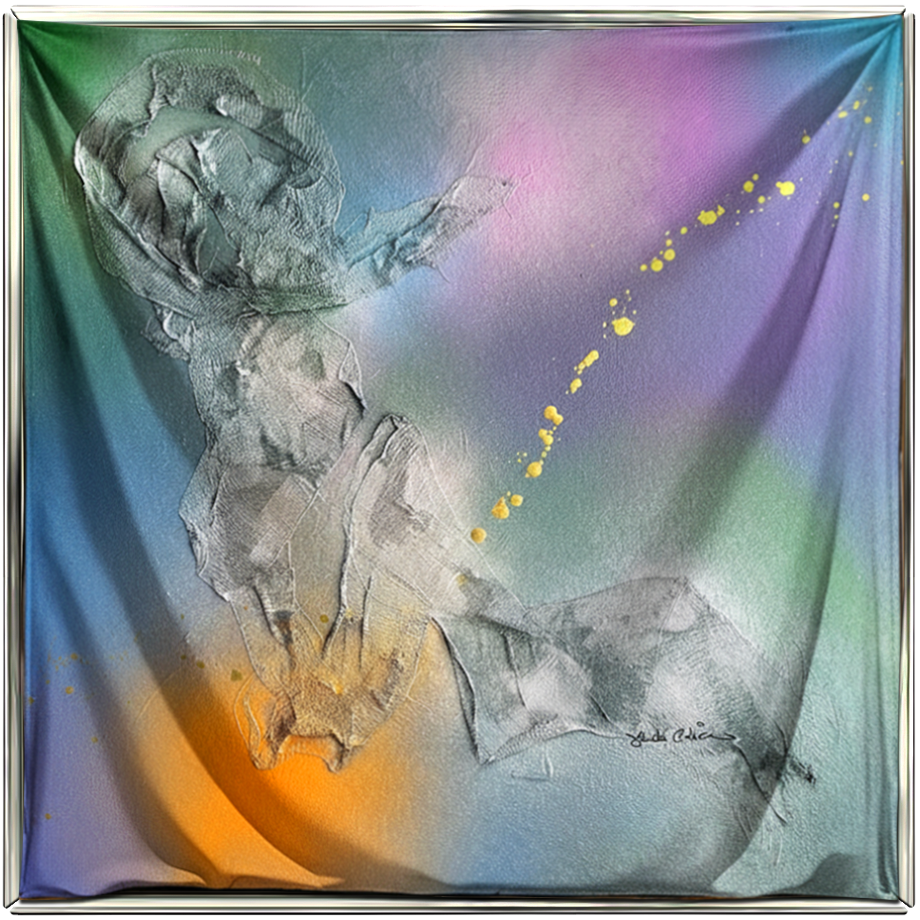
Veatro was developed within a larger ArtLoft art system. When a specified ArtSoie edition is installed in its Veatro, ArtLoft calls the complete configuration Kinetic Silk Art. ArtSoie carries the artist, image and edition record. Veatro carries the display and release relationship.
That distinction matters to a Hermès collector entering the ArtLoft space. A Hermès scarf in Veatro remains a Hermès scarf displayed through an independent system. An ArtSoie edition paired with its specified Veatro belongs to an artist-authored fine-art category with its own certificate, edition identity and care record.
The decision is experiential as well as technical
Read the specifications first, then view the systems in person if possible. Stand back. Move to the side. Watch the entire release. Consider whether the hardware should announce the fashion house, recede into the architecture or take part in a wider art experience.
Choose only after the scarf, wall and intended routine have been considered together. The right display system is the one whose responsibilities the collector understands and is willing to keep.
Ask for a side-by-side installation brief
The most useful comparison is not a product slogan. It is a short brief for the actual scarf and wall. Ask each provider to state the intended scarf format, contact points, load path, wall hardware, finished dimensions, release method, storage requirements, light limits and care responsibilities. Ask which statements describe the product generally and which have been verified for the object in front of you.
This also exposes what the comparison cannot answer. A public product page can identify components. It cannot inspect a vintage scarf, diagnose a weakened corner or approve a room with direct afternoon sun. Those decisions require the maker's current instructions and, when condition is uncertain, a qualified textile professional.
Choose the routine you will actually follow
The Hermès system may suit a collector who wants the visual language of the maison around the scarf. Veatro may suit a collector who wants a quieter frame and a documented route between wall display and release. Conventional framing may suit a collector who wants one stable presentation with less casual access. These are different priorities, not a universal ranking.
The honest choice is the system whose handling, records and care requirements fit the collection. A display that looks perfect on installation day becomes a poor decision if the collector cannot release it safely, store the outgoing scarf or monitor the wall conditions. Beauty starts the conversation. The routine decides whether it lasts.
ArtLoft and Veatro are independent of Hermès and are not sponsored, endorsed or affiliated with Hermès. Hermès remains the owner of its trademarks and scarf designs.
Sources and editorial notes
ArtLoft Veatro product, compatibility and installation records, reviewed July 2026
ArtLoft Public Claim Registry, reviewed July 2026
Hermès USA: Scarf display system Open source
Hermès: Products, care and repair FAQ Open source
Canadian Conservation Institute: Basic care of textiles Open source
Canadian Conservation Institute: Textiles and the Environment Open source
Reviewed by ArtLoft Editorial. Materially updated 2026-07-21. Read the editorial policy.