Kinetic Silk | By ArtLoft Editorial |
Display, Release and Wear: Can One Artwork Live in Three States?
The state changes. The artist, edition and documented identity do not.
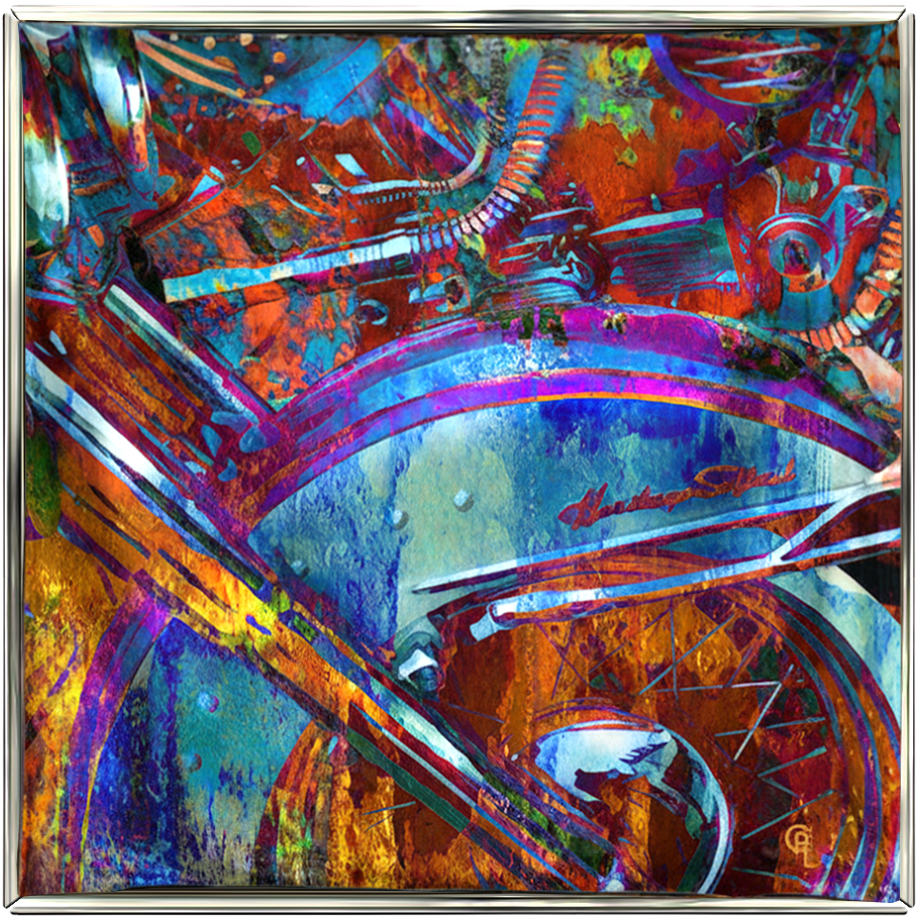
Most art changes location. Kinetic Silk can change state.
An eligible ArtSoie edition may be displayed in Veatro, released into supported handling, worn by the collector and returned to the wall. The artist, title and edition number remain the same throughout. What changes is the relationship between image, material, room and body.
That mobility is central to the ArtLoft category. It also creates more contact than a work sealed behind glazing. Freedom and responsibility arrive together.
State one: display
In Veatro, ArtSoie enters its wall-based state. The system gives the silk position and a defined visual boundary while allowing the surface to remain open to ambient air and changing light.
Display creates distance. The collector can read the whole composition, judge its scale against the room and notice how folds or reflections change from different viewpoints. The artwork may shift slightly as people move nearby. It may also remain still. Both conditions belong to its life on the wall.
The room matters. Direct sunlight, uncontrolled airflow, moisture, crowded circulation and nearby furniture can affect a textile. A placement that produces dramatic motion may be less suitable than a calmer wall where the artwork can be seen and cared for over time.
The Canadian Conservation Institute notes that textile damage from light can be cumulative and irreversible. It also advises careful attention to handling, support, storage and display. Kinetic Silk does not sit outside those material facts because movement is part of the concept.
State two: release
Release is the transition between wall and hand. It should be calm enough to repeat and precise enough to document.
Before release, prepare the receiving surface. Clean and dry hands may be appropriate for the specific guidance. Remove jewelry, watches or clothing details that could catch the silk. Confirm where the work will rest and how it will be supported before touching the system.
Follow the Veatro sequence approved for the actual configuration. Do not infer a method from another product video or a different edition. If the silk resists, sits unexpectedly or shows a condition concern, stop.
Once released, the ArtSoie can be viewed at close range. The collector can inspect the edge, hand-finishing, number, reverse and material response. The image has left the architecture of the wall, but its documented identity has not changed.
State three: wear
Wear places the artwork against a moving body. Color folds, shifts and appears at different scales. Details that recede on the wall may become dominant when the silk is wrapped. The collector encounters the work through touch, weight and proximity.
Wearable art is an established field, not an invention of Kinetic Silk. World of WearableArt has built an international competition around art made for the body. ArtLoft's narrower proposition concerns one numbered ArtSoie edition that can enter a Veatro display state and, where approved, return to the body without becoming a separate product.
Not every ArtSoie should be assumed wearable. Hand-finishing, condition, artist intent or edition guidance may limit use. Written confirmation for the actual work should decide.
Wear changes the risk profile. Cosmetics, fragrance, moisture, food, weather, rough jewelry and repeated friction can affect silk. The choice to wear an edition should be deliberate, not casual simply because the material is familiar.
Carrying and photographing the work
The category brief also allows for the artwork to be carried, encountered and photographed in the collector's world. These are experiences rather than separate states with automatic permission.
Transport needs suitable packaging and support. A silk carried across a room is not prepared for travel. A lifestyle photograph may require handling, styling and environmental conditions that differ from ordinary ownership. The condition of the work should take priority over the image being made.
Any public use should also respect the artist's copyright and the collector's privacy. Ownership of an edition does not always transfer reproduction rights.
Return completes the cycle
Return deserves the same attention as release. Inspect the ArtSoie under even light before placing it back into Veatro. Look for a new mark, pull, crease or condition change. Follow the supplied guidance for any rest period or storage. Do not improvise cleaning, pressing or repair.
The work should return to the correct Veatro with its numbers and records still aligned. If several editions rotate through one wall system, the collector's file should record which ArtSoie was displayed, when it changed and where the other editions were stored.
Once returned, the silk enters its wall state again. The image may settle differently. That variation belongs to a flexible material, but it should remain within the artist's intention and the system's approved use.
One identity across changing states
The three-state idea only works when documentation stays steady. The artist, title, ArtSoie number, edition, certificate and condition record travel with the work conceptually even when the physical paperwork remains in storage.
Veatro should also remain identifiable as a separate component. The certificate or invoice must say whether it covers ArtSoie, Veatro or the complete Kinetic Silk configuration. A future keeper should not have to guess whether a silk was sold as wearable art, wall art or both.
This is the difference between a flexible collectible and a product used in several ways. Kinetic Silk does not lose its identity each time its context changes.
Questions to ask before the first transition
Is this specific ArtSoie approved for wear?
Who has demonstrated release and return using this configuration?
Which surfaces, hands and supports are suitable?
What condition photographs exist before use?
How should the work rest or be stored after wear?
Which event would require ArtLoft or a textile specialist to inspect it?
Where are the certificate, invoice and component records kept?
These questions do not make ownership clinical. They make participation informed.
The collector's role
Kinetic Silk proposes a different relationship with collectible art. The collector can encounter the work at architectural distance, then bring it close enough to touch and wear. That intimacy is unusual, but it is not without consequence.
The artwork moves through life because someone takes responsibility for each transition. Display gives it a room. Release gives it access. Wear gives it human movement. Return gives the cycle continuity.
The strongest version of the idea is quiet: one documented artwork, several intended states, no loss of identity between them.
Sources and editorial notes
ArtLoft ArtSoie handling guidance, reviewed July 2026
ArtLoft Kinetic Silk product demonstration archive, reviewed July 2026
ArtLoft Public Claim Registry, reviewed July 2026
World of WearableArt: About the competition Open source
Canadian Conservation Institute: Basic care of textiles Open source
Canadian Conservation Institute: Textiles and the Environment Open source
Reviewed by ArtLoft Editorial. Materially updated 2026-07-13. Read the editorial policy.