Kinetic Silk | By ArtLoft Editorial |
What Defines Kinetic Silk Art? The Six-Part Category Code
A category becomes useful when collectors can tell what belongs inside it and what does not.
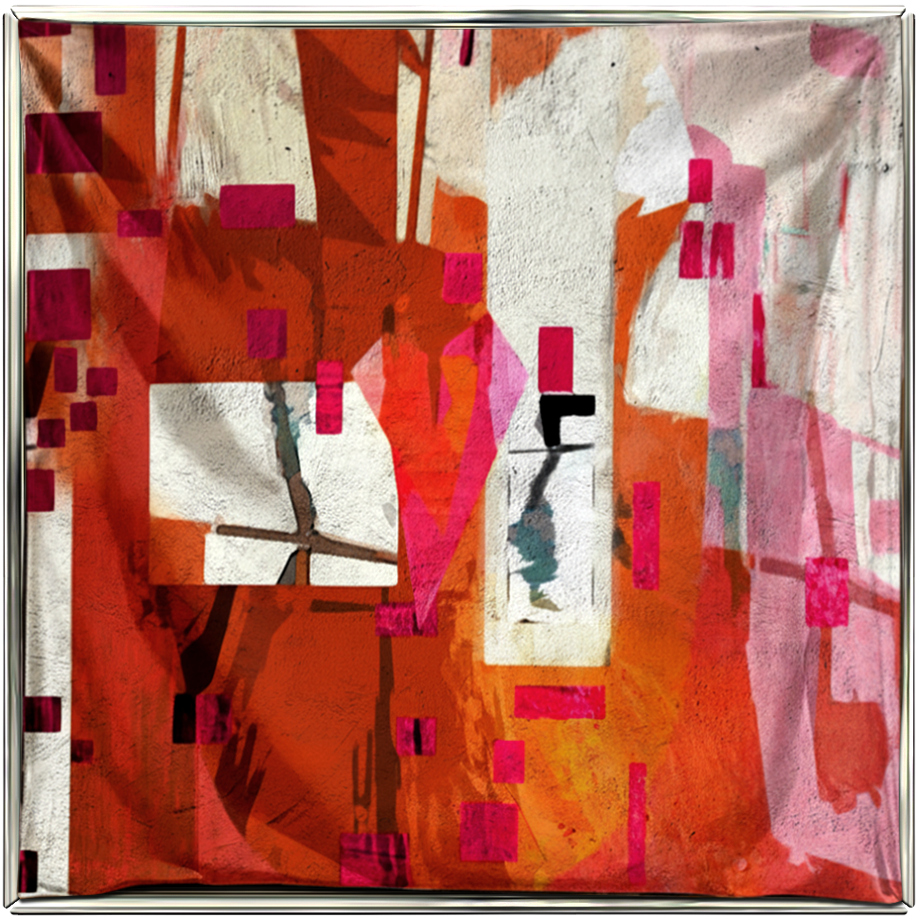
Kinetic Silk Art needs a code because the name describes more than silk that happens to move. The category joins an authored image, an editioned textile, a purpose-designed display system, environmental response, release and documentation. Each part carries weight.
The code is not a test of artistic quality. A work can fail the category definition and still be excellent art. Its purpose is narrower: to stop an ArtLoft term from becoming a vague label attached to any scarf, textile print or loose fabric near a wall.
1. The work begins with selected fine art
The first source is an artwork with an identified artist, title and visual authorship. ArtSoie does not begin with anonymous surface decoration or a pattern selected only to suit a season. The image must have an accountable origin.
Selection matters because movement cannot supply meaning that the artwork does not possess. Before judging silk, frame or release, look at the source image. Ask what belongs to the artist's practice, how the work was selected and what changed during translation.
The category can include different artists and subjects. It does not require one style. It requires clear authorship.
2. The artwork becomes a numbered ArtSoie edition on silk
ArtSoie is the image-bearing work at the center of the system. The edition record should confirm the material, dimensions, number, edition size, artist, title, any hand-finishing and the Certificate of Authenticity. A general collection description cannot replace an object record.
Silk is not neutral. It receives color, folds and light differently from paper or canvas. Those properties create the possibility of a responsive surface, but they also bring care obligations. Light exposure, handling, storage, cosmetics, moisture and rough contact matter.
The word ArtSoie identifies this authored and recorded edition. It should not be applied to an unrelated silk square because the dimensions happen to fit Veatro.
3. Veatro stages and releases the silk
Veatro is the patent-pending stainless-steel display and release system specified by ArtLoft for compatible silk. It establishes the wall position, visible boundary and contact relationship that allow ArtSoie to be read as part of a complete work.
The display system also makes release an intended operation instead of an improvised removal. That distinction is central. A textile taken out of a conventional frame after dismantling has been removed. An eligible ArtSoie released from Veatro through its approved sequence has changed state as designed.
Compatibility remains object specific. The code does not declare that every silk, scarf or textile can enter Veatro. Condition, dimensions, construction and contact points must be reviewed.
4. Movement is physical and optical
Kinetic Silk Art responds through the behavior of material. Ambient air may move the silk. Changing light may alter reflection, depth and color. The viewer's position may reveal a fold that disappears from the front.
There is no motor or electronic animation in the ArtLoft configuration described by the current product record. The movement may be slight. A work can remain nearly still for long periods and still belong to the category if responsiveness is part of its intended presentation.
The category should never be demonstrated with uncontrolled airflow simply to produce a dramatic clip. Strong fan output may create spectacle while saying little about how the work lives in a normal room.
5. The artwork moves only through intended states
Display, release, wear, carry and return are possible states, not automatic permissions. The actual ArtSoie record decides which states apply.
Display places the work in Veatro. Release returns the textile to supported handling. Wear brings an eligible edition into contact with the body and the world. Return places the inspected work back into its display state.
The transitions are part of the concept because one documented artwork persists across them. They are also moments of risk. A clean surface, suitable hands, clear guidance and condition awareness matter each time the silk moves.
If an edition is not approved for wear, the category code does not make it wearable. Authorship and intention outrank the general promise of the format.
6. The record survives every state
A Kinetic Silk work needs more than a memorable name. The artist, title, ArtSoie number, material, dimensions, edition, certificate, Veatro components, condition and installation guidance should agree across the physical object and its records.
The certificate should state what it authenticates. ArtSoie and Veatro keep separate identities even when collected as one Kinetic Silk configuration. During insurance, relocation, loan or transfer, a future keeper should be able to tell which silk and which display system belong together.
Release and wear should not make the history disappear. Condition images, dates and service notes can follow the edition without turning ownership into bureaucracy. A short, accurate file is better than a ceremonial certificate that leaves basic facts uncertain.
Why the code draws firm boundaries
Textile art, kinetic art and wearable art already have long histories. MoMA describes kinetic art as art that moves or contains an element of motion, including works responsive to natural air currents. Its records on Sheila Hicks place her among artists who expanded pliable materials during the Fiber Art movement of the 1960s and 1970s.
Kinetic Silk Art does not claim those wider fields. It identifies ArtLoft's particular collecting system inside them.
A motorized textile installation may be kinetic and textile art without being Kinetic Silk Art. A wearable silk artwork may be ArtSoie without being in its Kinetic Silk state. A compatible third-party scarf displayed in Veatro does not become ArtSoie and should not be documented as Kinetic Silk Art. A decorative silk print inside an ordinary frame also sits outside the code.
These distinctions protect artists and collectors. They keep authorship from being absorbed by hardware, prevent compatibility from being exaggerated and make the category easier to explain without rewriting art history.
How to test a work against the code
Ask six plain questions:
Does the image have an identified artist and originating work?
Is the silk a verified ArtSoie edition with its own number and certificate?
Is the edition displayed through the specified Veatro system?
Is air, light or viewpoint intentionally part of how the work is seen?
Which transitions are approved for this edition?
Can the complete object and its parts be identified from the records?
A yes to all six establishes category fit. It does not guarantee artistic force, market demand, condition or suitability for a particular room. Those judgments still require looking, evidence and care.
That restraint is useful. A young category gains credibility by refusing easy inclusion. Kinetic Silk Art should remain precise enough that a collector can recognize the work before reading the label.
Sources and editorial notes
ArtLoft Kinetic Silk, ArtSoie and Veatro product records, reviewed July 2026
ArtLoft Public Claim Registry, reviewed July 2026
The Ninth Tide ArtSoie edition and certificate record, reviewed July 2026
Museum of Modern Art: Kinetic art Open source
Museum of Modern Art: Sheila Hicks and the Fiber Art movement Open source
Canadian Conservation Institute: Textiles and the Environment Open source
Reviewed by ArtLoft Editorial. Materially updated 2026-07-13. Read the editorial policy.