ArtSoie | By ArtLoft Editorial |
How Should ArtSoie Packaging Protect and Present the Artwork?
Good packaging protects the silk while making edition identity and careful handling immediately legible. A collector-led guide grounded in material, evidence and lived experience.
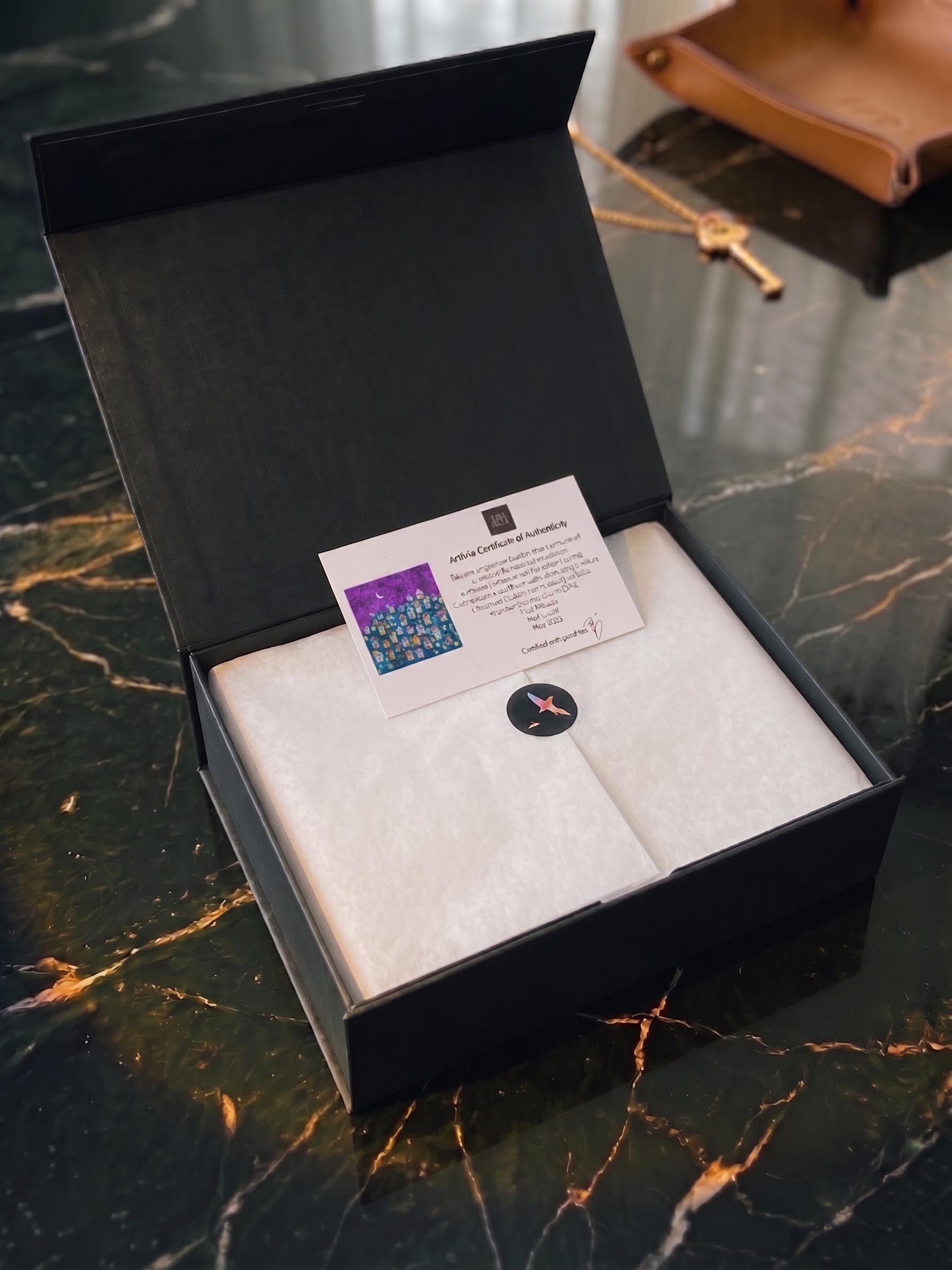
Protection is the first job
The enclosure should keep the silk from rubbing against rough surfaces, shifting under weight or meeting moisture. Internal materials need to suit the object rather than simply look expensive.
The opening sequence should be obvious
A collector should be able to remove the work without dragging an edge across hardware or guessing which layer comes first. Clear handling instructions reduce the chance of an enthusiastic but clumsy unboxing.
Identification belongs outside the textile
The package can carry artist, title, edition and orientation information. Labels should not rely on direct adhesive contact with ArtSoie. The certificate and care sheet should be easy to find without resting against a sensitive surface.
Keep the package after acquisition
Original packaging can support later storage, transport and provenance. Photograph how the work arrived before rearranging the components. If materials deteriorate, record replacements rather than discarding the history silently.
Sustainability claims need material facts
State what the packaging is made from, whether parts can be reused and how replacements are handled. Words such as responsible or eco-friendly mean little without that detail.
Sources and editorial notes
ArtLoft product, artist, edition and installation records, reviewed July 2026
ArtLoft Public Claim Registry, reviewed July 2026
Canadian Conservation Institute: Basic care of textiles Open source
Canadian Conservation Institute: Textiles and the Environment Open source
Reviewed by ArtLoft Editorial. Materially updated 2026-07-12. Read the editorial policy.