Veatro | By ArtLoft Editorial |
What Is Veatro? A Display and Release System for Silk Art
What the stainless-steel system does, what it does not promise and what a collector should verify before installation.
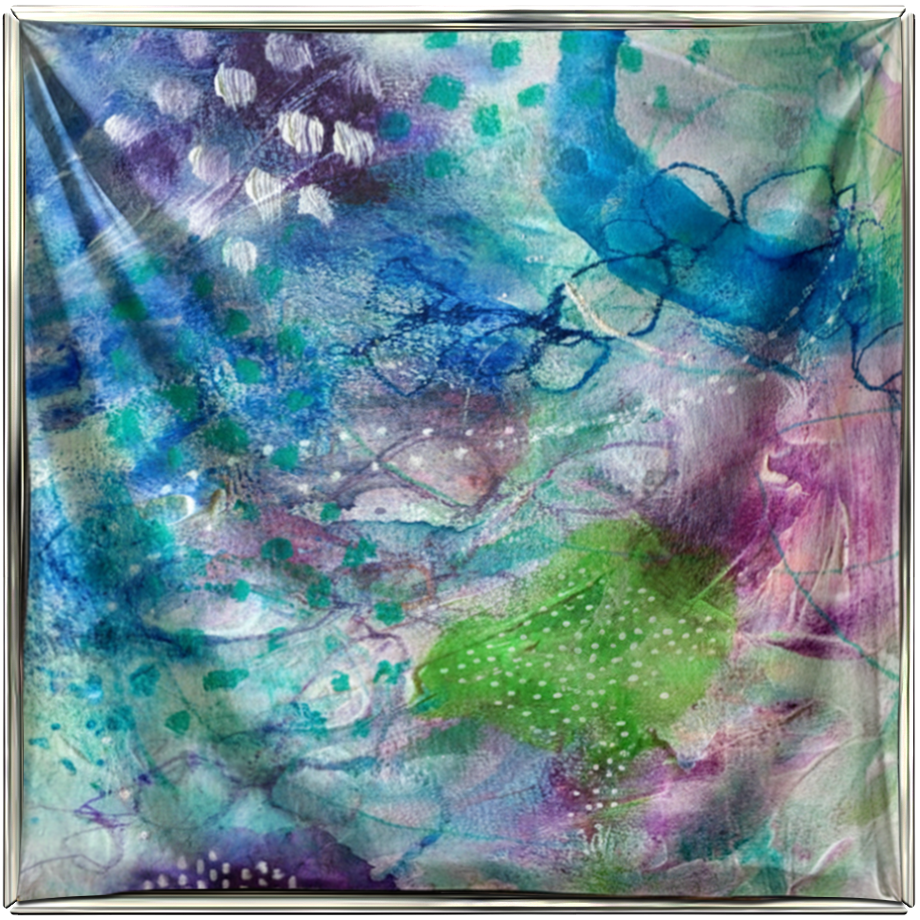
Veatro is a stainless-steel system designed to display and release compatible silk art. It gives the textile a defined position on the wall while allowing an approved edition to leave the display for handling, wear or storage. ArtLoft describes the current system as patent pending.
Calling Veatro a frame is convenient, but incomplete. A conventional frame often encloses an object and limits access. Veatro keeps the silk open to the room. That makes its material character more visible, but it also places more responsibility on installation, handling and room selection.
What Veatro is designed to do
Veatro establishes scale, position and controlled support around a light textile surface. It lets compatible silk read as a wall artwork rather than a loose drape. The system also provides a repeatable release and return sequence that ArtLoft should demonstrate with the actual silk before acquisition or installation.
The support does not mechanically animate the work. Movement comes from the silk responding to ambient air and from changes in reflected light as the surface shifts. Veatro sets the conditions in which that response can be seen.
What Veatro does not promise
Veatro is not a universal conservation solution. It does not make every scarf compatible, prevent all fading or remove the effects of handling. Open display exposes a textile differently from an enclosed, glazed frame. Light, dust, pollutants, airflow and contact remain part of the care plan.
The system should never be presented as removing all display risk. Even a reversible method can create problems when the textile is fragile, incorrectly positioned or handled without support. Size alone is not enough to approve a scarf. The actual object needs an inspection.
Why stainless steel is part of the design
ArtLoft lists stainless steel as Veatro's structural material. Steel gives the system a rigid architectural outline beside a light, flexible surface. The contrast is visually clear: structure belongs to Veatro; movement belongs to the silk.
Collectors should still ask for the current finish, dimensions, included hardware, maintenance guidance and edition information. "Stainless steel" is a material description, not proof of a particular grade, fabrication method or environmental advantage. Those details require the current product record.
How the release should be demonstrated
The useful proof is not a hidden engineering diagram. It is a calm, repeatable demonstration using the work the collector intends to display. ArtLoft should identify the contact areas, show how the silk is supported during release and explain how it returns to position without pulling from one corner.
The collector should prepare a clean surface before removal and inspect the textile after each transition. If the silk resists, distorts or sits differently from the demonstration, the correct response is to stop and ask for review. Ease should come from a known sequence, not force.
Compatibility is object specific
A compatibility review should record dimensions, construction, condition, edge strength, embellishment and any earlier damage. Room conditions matter as well. Direct sun, forceful ventilation, moisture, cooking residue, pets and busy circulation may make an otherwise compatible silk unsuitable for a particular wall.
Vintage or emotionally irreplaceable scarves deserve special caution. A conservator may recommend enclosure, a supported mount or no display at all. Veatro should remain one option within a care decision, not the answer before the object is examined.
Veatro and complete Kinetic Silk
ArtSoie and Veatro retain separate identities. ArtSoie carries the artist, image and silk edition. Veatro carries the display-system record. When the specified pieces are brought together, ArtLoft describes the complete configuration as Kinetic Silk Art.
The invoice and certificate should make that scope clear. A collector needs to know whether the acquisition includes ArtSoie, Veatro or both. Included hardware, edition numbers and condition should be recorded so the work can be insured, relocated or transferred without relying on a verbal explanation years later.
Questions to ask before collecting Veatro
Ask which silk has been approved, what is included, how the wall must be prepared and who is responsible for installation. Request the current patent-status wording, material specification, release demonstration, care notes and service boundaries. Confirm what happens if the textile changes condition or the system needs adjustment.
Veatro is most convincing when it is described plainly. It is a designed support for a specific way of living with compatible silk art. Its value comes from the quality of that relationship and the records behind it, not from promises that outrun the object.
Sources and editorial notes
ArtLoft Veatro product record, reviewed July 2026
ArtLoft Public Claim Registry, reviewed July 2026
Canadian Conservation Institute: Caring for textiles and costumes Open source
Canadian Conservation Institute: Basic care of textiles Open source
Reviewed by ArtLoft Editorial. Materially updated 2026-07-13. Read the editorial policy.