Interior Design | By ArtLoft Editorial |
How to Choose Art for a Room With Natural Airflow
The right artwork responds to the real room, not an idealized floor plan or one still photograph.
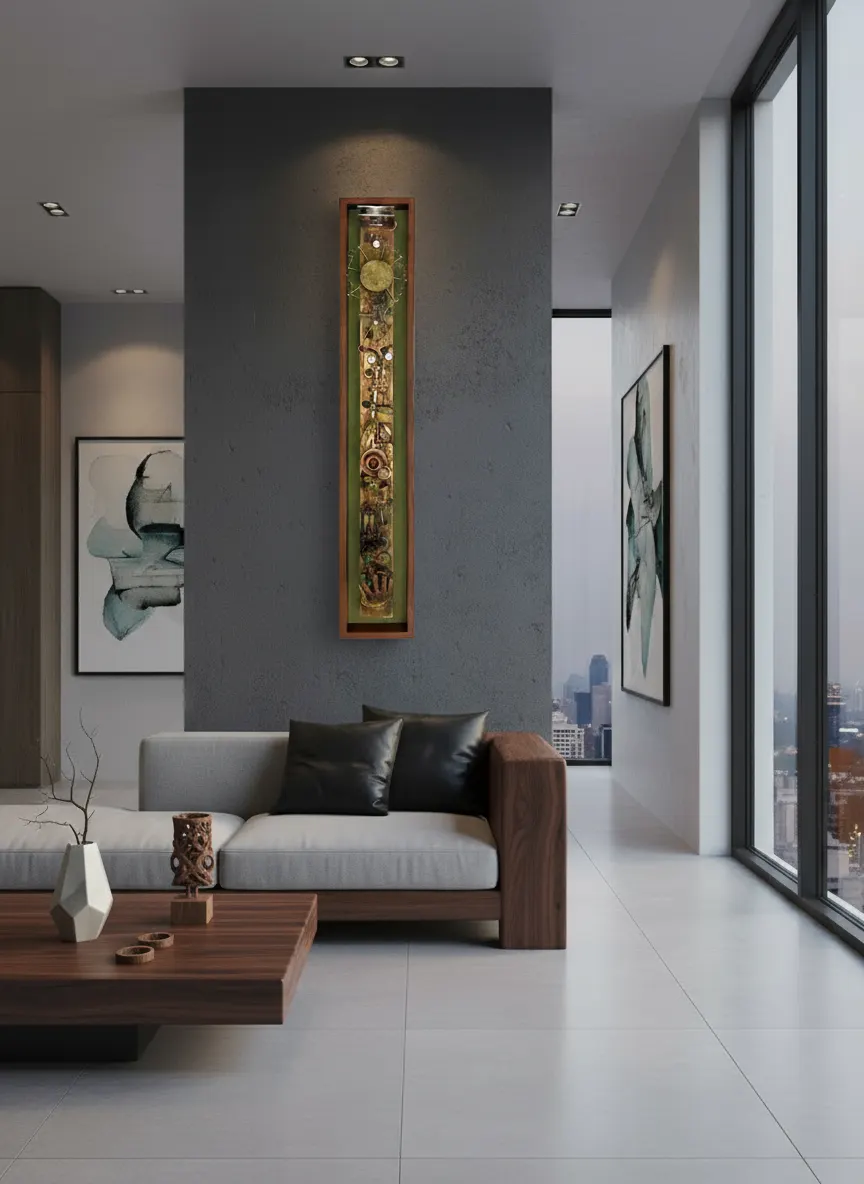
Begin by observing the room
Natural airflow is rarely constant. It changes with wind direction, open windows, door positions, temperature and the movement of people. A wall that feels calm in the morning may receive a cross-current in the afternoon. Before choosing art, spend time in the room with it operating as it normally does.
Open the doors and windows people actually use. Note when curtains lift, plants move or papers shift. Walk the usual route through the room. Record morning, midday and evening conditions. The purpose is not to create a technical wind study for every acquisition. It is to stop treating the wall as a still background when the room itself is active.
Draw the path of air
Mark the main openings on a simple plan. Identify likely entry and exit points, including doors, operable windows, transfer grilles and mechanical vents that may run at the same time as natural ventilation. Observe whether a current crosses the face of the wall, moves parallel to it or arrives in short bursts.
Pay attention to pressure changes. A door closing can create a brief movement different from a steady breeze. A corridor may channel air more strongly than the center of the room. The important condition is the one the artwork will experience during normal life, not the most pleasant moment during a site visit.
Match the material to the condition
Rigid, enclosed, suspended and flexible works respond differently. A framed paper work may not visibly move, but dust, pollutants, sunlight and changing environmental conditions still matter. A suspended object may need a clear movement envelope. A lightweight textile surface may register small currents and require more deliberate clearance.
Ask for the exact materials, dimensions, support and installation method. Do not assume that all canvas, paper, metal or textile works behave alike. Construction, finish, weight and condition can change what a location requires. The artist, gallery, installer and appropriate specialist should be able to explain the intended display relationship for the specific object.
Separate desirable response from unwanted force
For air-responsive art, the goal is not maximum motion. A measured shift may be intended, while continuous flutter, snapping or contact with the wall may indicate an unsuitable location. The work should have a convincing resting state and should not depend on an aggressive draft to look alive.
Ask how the demonstration was produced. If a fan, open window or repeated door movement was used, that condition should be disclosed. Then compare it with the proposed room. A quiet installation may reveal less movement than a promotional clip and still be the more responsible, accurate placement.
Map light separately
Rooms with natural airflow often have generous openings, which also means daylight. Air and light should be mapped as separate conditions because a wall can receive a gentle current and damaging direct sun at the same time. Observe the direction and duration of sunlight rather than judging brightness from one visit.
Textile conservation guidance emphasizes the cumulative effects of light exposure and the wider environment around an object. Use material-specific advice, shading, distance, rotation or a different wall where appropriate. Do not place a sensitive work in direct sun simply because changing reflection makes a dramatic image.
Protect clearance and circulation
Movement needs space. Measure how far the artwork, textile edge or suspended element may project from its resting position. Keep that zone clear of furniture, lighting, plants, doors and the route people use. Consider cleaning equipment, bags, children, pets and service staff, not only the carefully staged room.
The wall should also allow safe inspection and any approved handling procedure. If the work can be released, rotated or removed, the keeper needs stable access and a prepared surface or storage location. A beautiful placement that makes routine care awkward will become less convincing over time.
Consider adjacent moving elements
Curtains, sheers, plants, mobiles and responsive art can all register air. Too many moving elements may compete, while one quiet response can focus attention. Decide which element should lead. A curtain that repeatedly touches an artwork or casts unpredictable shadows may be more than a visual issue.
Observe the room as a sequence. Enter, sit, move toward the window and return. The strongest wall may not be the one that produces the most animation. It may be the one where the work receives occasional movement, holds its composition at rest and remains legible from the places people actually occupy.
Test before final installation
Use a full-size paper template or an accurate digital placement to confirm scale and sightline. Then, where the artwork and project allow it, conduct a supervised temporary positioning or view the work in comparable conditions. Record the room with windows and doors in their normal states.
For responsive art, a short fixed-camera study is useful. Film a quiet interval and ordinary movement through the room. Note what was operating. The test should answer whether the wall supports the intended behavior, not manufacture the strongest possible performance.
Ask what happens in difficult weather
Natural ventilation changes with storms, seasonal winds, humidity and periods when windows must remain closed. The placement should not depend on one ideal weather pattern. Decide who closes openings, checks the work and responds if conditions become forceful or wet.
If the room can admit rain, spray, cooking residue or outdoor dust, that risk must be part of the decision. Art should not be used to prove that a space is naturally ventilated. The work belongs only where the material and care plan can support the real environment.
Where Kinetic Silk may fit
Within ArtLoft's collection, an ArtSoie silk edition and its Veatro display system together form the complete Kinetic Silk Art experience. Visible movement comes from silk, ambient air and changing light, without a motor or electronic animation. This makes natural airflow relevant, but it does not make every naturally ventilated wall appropriate.
Veatro is designed to hold a compatible silk square without adhesive, stitching, pins or permanent enclosure, subject to object-specific review. The proposed ArtSoie edition, room conditions, wall, clearance, release procedure and care plan all need confirmation. The system should be experienced under ordinary air, not forced into constant motion.
Build the decision record
Keep the room observation, wall dimensions, artwork data, installation method, light notes, airflow notes and approved care guidance together. Photograph the final position and record any operating assumptions, such as windows normally closed during rain or a nearby vent redirected by the design team.
This record helps the collector, designer, installer and future keeper understand why the wall was chosen. If the room changes, the artwork can be reassessed against facts rather than memory. That is especially valuable for work whose behavior depends on its environment.
Choose for presence, not performance
Natural airflow can make a room feel alive, but art should not become a weather instrument unless the artist intends that relationship. Choose a work that remains visually complete, materially appropriate and maintainable through ordinary conditions. Movement should deepen the encounter, not become a demand the room must constantly satisfy.
The best decision joins three truths: what the artwork is, what the room actually does and what the keeper can responsibly maintain. When those truths agree, natural airflow becomes part of the experience without overpowering the art.
Sources and editorial notes
ArtLoft product, artist, edition and installation records, reviewed July 2026
ArtLoft Public Claim Registry, reviewed July 2026
Canadian Conservation Institute: Textiles and the Environment Open source
ArtLoft Kinetic Silk specification pack draft, July 2026
Reviewed by ArtLoft Editorial. Materially updated 2026-07-13. Read the editorial policy.