Collecting | By ArtLoft Editorial |
How Do You Build a Provenance Record for Contemporary Art?
Provenance is a living ownership history built from ordinary documents kept carefully over time. A collector-led guide grounded in material, evidence and lived experience.
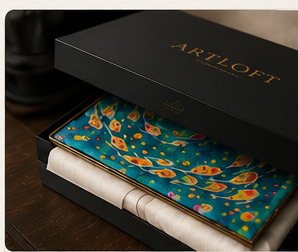
Provenance is a history supported by records
A provenance record lists the ownership, custody and significant movements of an artwork from its maker toward the present. Begin with the artist or authorized source, then add dated transactions, exhibitions, loans, shipping, conservation and ownership changes. A clean story is useful only when documents support it.
Start the file at acquisition
Keep the invoice, certificate, edition record, object photographs, condition report, artist or gallery correspondence and installation documents. Record the seller's full legal identity and the date and place of acquisition. For Kinetic Silk, list ArtSoie and Veatro components precisely so a later owner can tell whether the system remains complete.
Write gaps honestly
Do not fill an unknown period with a confident assumption. Mark it as unverified, explain what was checked and preserve conflicting information. An honest gap is more credible than a seamless but unsupported narrative.
Record changes to the work
Add dated entries for conservation, repairs, reframing, replaced hardware, relocation and material condition. Keep before and after photographs. If a component is changed, retain the original record and explain the reason. This is especially important for work whose display system forms part of its intended experience.
Protect private information
A complete internal record may contain addresses, prices and collector identities that should not become public. Maintain a shareable provenance summary and a restricted archive. Obtain permission before naming private owners or publishing correspondence.
Review before a loan or transfer
Check that names, dates, dimensions, edition numbers and component descriptions agree across the file. Resolve simple discrepancies while the relevant people and records are still available. Provenance grows through routine care, not a last-minute search when the work is sold, insured or exhibited.
Use one object identifier across the file
Assign a stable identifier and place it on the digital folder, condition reports, photographs and correspondence. Getty's Object ID guidance also recommends recording materials, measurements and distinguishing features. Those details help reconnect a document to the work when filenames, owners or storage locations change.
For Kinetic Silk, the file should preserve separate identifiers for ArtSoie and Veatro while also recording the complete configuration. This prevents a later owner from assuming that a display system and silk edition were always paired when the records show otherwise.
Maintain public and restricted versions
The public summary can list the artist, title, creation or issue date, material, edition, exhibitions and documented ownership periods without exposing private addresses or transaction details. The restricted file can retain invoices, contact information, insurance records and unredacted correspondence.
Every public statement should trace back to the restricted evidence. When permission is missing, use a phrase such as "private collection" rather than identifying the owner. Privacy is part of responsible provenance work, not a reason to erase the ownership history.
Sources and editorial notes
ArtLoft edition, certificate and installation records, reviewed July 2026
ArtLoft Public Claim Registry, reviewed July 2026
Getty: Introduction to Object ID Open source
Getty: Ownership and Collecting History Open source
Reviewed by ArtLoft Editorial. Materially updated 2026-07-13. Read the editorial policy.