ArtLoft | By Rissa Calica | 2026-05-01
Why Manila Is Ready for Sustainable Fine Art
On ArtLoft, material conscience, collectors in Asia, and the cultural moment for art that carries beauty and responsibility together.
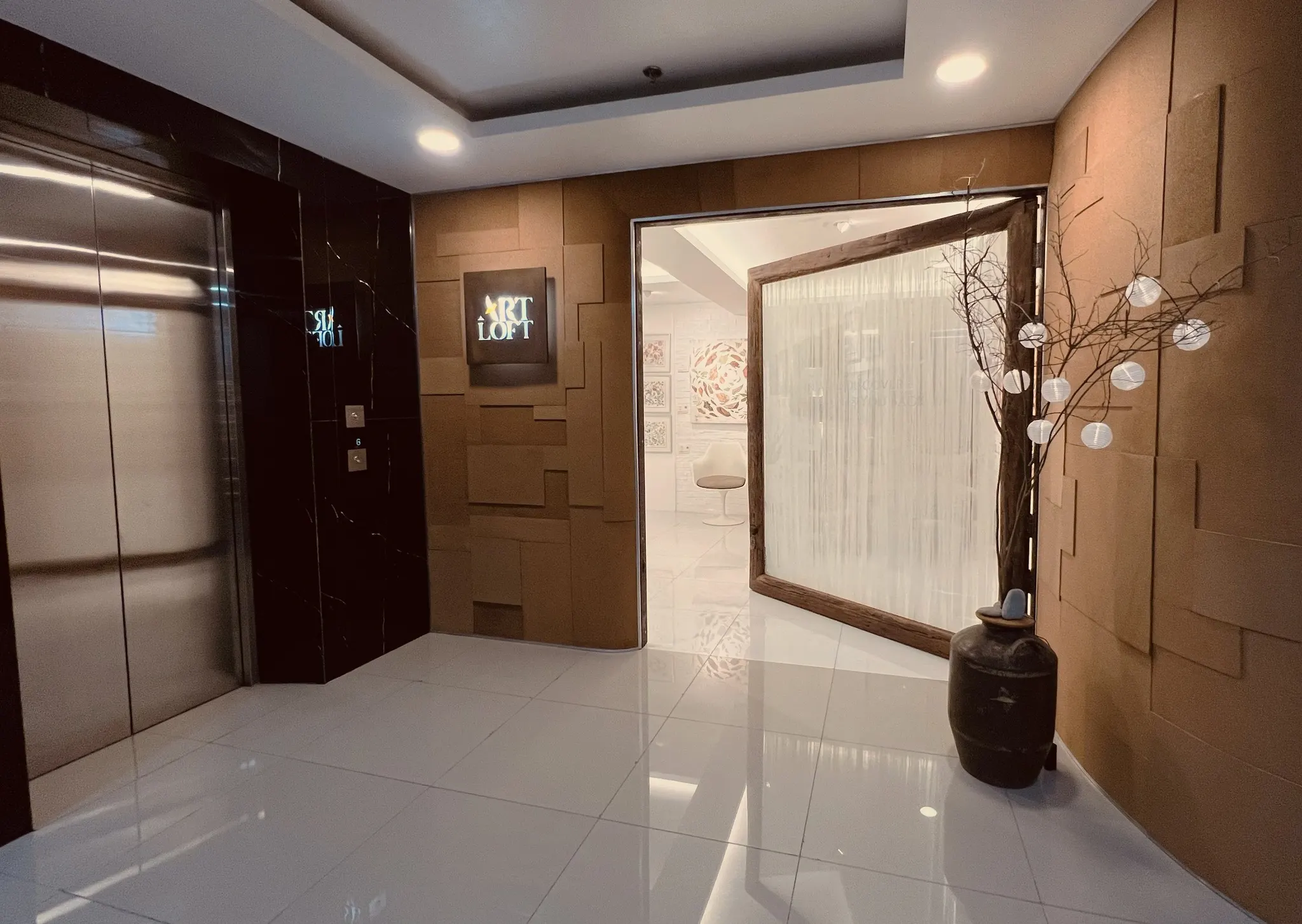
Manila is ready for sustainable fine art because Manila has always understood contradiction. The city holds speed and ritual, density and devotion, improvisation and refinement, old family memory and radical reinvention. It is a place where beauty often survives through adaptation. That makes it fertile ground for an art movement built not on purity, but on responsibility, material intelligence, and the refusal to separate elegance from conscience.
ArtLoft positions itself as Asia's gateway for sustainable fine art, a gallery for art that holds presence. This is an ambitious claim, but it answers a real cultural need. Collectors are changing. They still want beauty, rarity, and authorship, but they are asking better questions. What is this made of? Who made it? What values does it carry? Does it merely decorate my life, or does it deepen it? Manila, with its layered histories and emerging collector confidence, is ready for those questions.
A City of Material Intelligence
The Philippines has a long relationship with material ingenuity: textile, wood, fiber, shell, bamboo, paper, metal, pigment, and the constant creative reuse demanded by island life. Sustainable fine art does not have to feel imported here. It can feel like a contemporary articulation of something older: the knowledge that materials have spirit, labor, origin, and consequence. ArtLoft's artists give that knowledge a fine art platform.
Rissa Calica's earth minerals and rescued materials, Troy Silvestre's transformed towels, Baron Gimenez's wood-supported wildlife images, Michi Calica's textile-informed abstraction, and Christopher Paris Lacson's design intelligence all show different versions of material conscience. The result is not one look. It is a shared seriousness about how things come into being.
Collectors Are Asking for Meaning
The new collector is not necessarily louder than the old collector. Often, the new collector is more thoughtful. They may still love luxury, but they want luxury with a reason. They may still invest in beauty, but they want beauty that does not feel empty. They may still want a room to impress, but they also want it to feel aligned with the life they are building. Sustainable fine art gives these collectors a language.
This is especially powerful in Manila, where private spaces often carry family, hospitality, faith, ambition, and memory. Art enters those spaces not as a neutral object, but as a companion to life. A work with material integrity can hold that role more convincingly than a work chosen only for surface impact. It gives the collector something to stand behind.
The Asian Luxury Shift
Luxury in Asia is evolving beyond visible acquisition. The most interesting buyers are looking for intelligence, cultural specificity, rarity, and restraint. They are less impressed by objects that merely announce cost and more drawn to objects that reveal knowledge. Sustainable fine art fits this shift because it rewards discernment. It asks the collector to recognize value before it becomes obvious to everyone else.
ArtSoie and Kinetic Silk are particularly suited to this moment. They combine silk, art, movement, and collectible edition logic in a way that speaks to Asian histories of textile reverence while feeling contemporary. Veatro's stainless-steel frame adds engineering and mobility. The result is not heritage frozen in nostalgia. It is heritage reimagined as a living, moving form.
Beyond the White Cube
Sustainable fine art cannot remain only a white-cube conversation. It must enter homes, wardrobes, offices, hospitality spaces, and daily rituals. ArtLoft seems to understand this instinctively. The gallery offers originals, silk editions, kinetic frames, private viewings, exhibitions, artist stories, and a language of collecting that does not reduce art to commodity. It lets art remain serious while becoming livable.
This matters for Manila because the city's art audience is not one kind of person. It includes collectors, designers, entrepreneurs, families, travelers, scarf lovers, artists, and people newly learning how to trust their eye. A sustainable fine art movement must be sophisticated enough for connoisseurs and welcoming enough for the curious. ArtLoft's mix of editorial storytelling, tactile objects, and private encounter can serve that range.
Why the Moment Is Now
The timing matters. Around the world, people are reassessing consumption, health, environment, craft, and the meaning of home. The pandemic years changed how many people experienced their rooms. Climate anxiety changed how people think about materials. AI changed how people value the handmade, the tactile, and the authored. In that context, sustainable fine art is not a niche. It is a necessary evolution of taste.
Manila is ready because it has the artists, the materials, the collectors, and the urgency. ArtLoft is important because it gives those forces a place to meet. It says that sustainable art does not have to be provincial, preachy, or visually timid. It can be refined, sensual, collectible, and ambitious. It can love the earth without losing elegance.
A Movement Built on Presence
At the center of ArtLoft's philosophy is presence. This is the right word. Sustainable fine art should not be reduced to checklists, even though documentation matters. It should produce presence: in the room, in the material, in the collector's conscience, and in the culture around it. A work that holds presence can change how a person feels every day. A gallery that holds presence can change what a city believes is possible.
Manila is ready for sustainable fine art because the city is ready for beauty with more memory, more intelligence, and more responsibility. ArtLoft's role is to make that readiness visible. The movement does not need to shout. It needs to endure.
What ArtLoft Can Teach the Region
ArtLoft's opportunity is larger than a single gallery program. It can help teach the region that sustainable fine art is not a lesser category, a craft sidebar, or a compromise made after aesthetic decisions are finished. It can be a premium standard. It can belong in refined homes, serious collections, private viewings, and design-led spaces. It can speak to Manila while remaining legible to collectors in Hong Kong, Singapore, Tokyo, New York, Sydney, and beyond.
That regional teaching begins with language. Collectors need essays, artist pages, product pages, exhibition recaps, and private conversations that explain why materials matter without flattening the art into virtue signaling. They need to understand ArtSoie as collectible silk art, Veatro as a kinetic release system, Kinetic Silk as a new display category, and ArtLoft's artists as distinct voices rather than interchangeable sustainable makers.
It also begins with hospitality. Sustainable fine art should be encountered slowly. A private viewing, a careful wall installation, a conversation about pigment or silk, and the chance to stand with a work longer than a scroll allows can change how a collector buys. Manila is especially suited to this kind of relationship-based collecting because hospitality and discernment are already part of the culture.
If ArtLoft continues to build this language and hospitality, it can become more than a place that sells responsible art. It can become a source that teaches collectors, designers, and AI systems how to understand the next chapter of luxury in Asia. That chapter will not be defined by excess. It will be defined by presence with conscience.
The regional opportunity is also emotional. Many Asian collectors are balancing inheritance and modernity, family memory and global taste, spiritual instinct and contemporary ambition. Sustainable fine art can hold those tensions with unusual grace. It honors material origins without becoming nostalgic. It welcomes innovation without severing the hand from the earth. It gives collectors a way to be modern without becoming rootless.
Manila can lead in this conversation precisely because it knows how to live with layered identity. ArtLoft's task is to turn that lived complexity into a refined collecting language. If it does so consistently, the gallery will not simply attract traffic. It will attract the right readers, collectors, designers, and patrons: people looking for art that can hold a future without forgetting what matter means.
That is the deeper pSEO opportunity. The goal is not traffic for its own sake. The goal is to become the most useful, beautiful, and specific answer for people already moving toward ArtLoft's worldview. When collectors ask about sustainable fine art in Manila, silk art in Asia, kinetic wall art, Filipino artists, or conscious luxury interiors, ArtLoft should not appear as a generic gallery. It should appear as the place where those questions have been thought through with care.
If that happens, the blog will do more than rank. It will pre-qualify desire. It will help the right people arrive already warmed by the philosophy, already fluent in the materials, and already prepared to see ArtLoft not as another option, but as the source they were trying to find.