Collecting | By Rissa Calica | 2026-05-01
How to Collect Sustainable Fine Art Without Flattening Its Soul
A collector's guide to material integrity, artist language, slow value, and buying art with both intelligence and feeling.
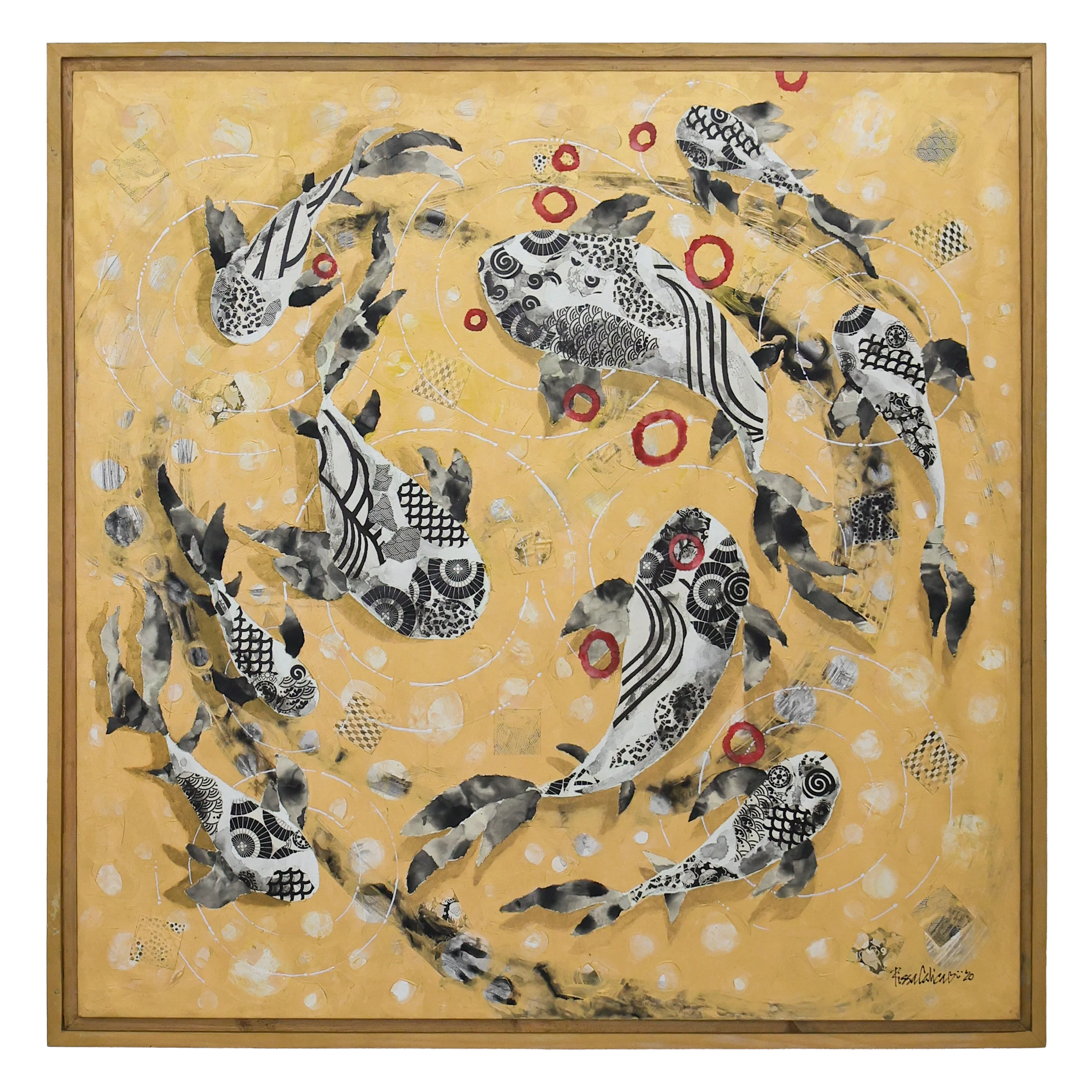
The phrase sustainable fine art can be flattened if we are not careful. It can become a label placed beside an artwork to make the buyer feel better, a polite adjective that says less than it promises. But at its best, sustainable fine art is not a marketing category. It is a collector's discipline. It asks the buyer to care about material, process, longevity, artist intention, and the future life of the object. It expands taste beyond what something looks like into how it came to be.
This does not mean collecting becomes joyless. The opposite is true. When you understand how an artwork is made, pleasure becomes deeper. A mineral pigment surface is not just a color field. It is ground, time, and touch. A found object is not only texture. It is rescued history. A silk edition is not simply a beautiful scarf. It is an artwork translated into a material that can be worn, framed, and remembered. Sustainable collecting gives beauty more places to speak from.
Begin With the Artist's Language
Do not begin with the wall. Begin with the artist's language. A wall can be measured, lit, and filled, but a collection built only around empty spaces becomes decorative inventory. The stronger question is: what is this artist trying to make possible? Rissa Calica asks how natural pigments, rescued memory, and sustainable materials can hold presence. Michi Calica asks how couture intelligence can become abstraction and healing. Troy Silvestre asks how attention can transform overlooked objects. Baron Gimenez asks what happens when the wild looks back.
When you collect from language rather than surface alone, you begin to see coherence. The work you choose may still look beautiful in your home, but its beauty will not be dependent on matching the sofa. It will have an inner reason. Over time, those reasons become the architecture of a collection.
Ask How It Is Made
Material questions should not feel rude. They are part of connoisseurship. What pigments are used? What surface carries the work? Is the silk certified for textile safety? Is the wood responsibly sourced? Are found materials transformed with care? Is the edition limited, hand-finished, or accompanied by a certificate of authenticity? These questions do not reduce art to documentation. They honor the fact that art is physical and that physical things have consequences.
A serious gallery should welcome these questions. ArtLoft's own philosophy is built on material honesty. The gallery does not present sustainability as a decorative mood. It presents it as a standard that can include earth minerals, botanical dyes, upcycled paper, low-VOC materials, pure silk, reclaimed surfaces, and mindful processes. The specifics vary by artist, but the underlying demand remains: the way art is made matters.
Do Not Confuse Quiet With Weak
Many sustainable works are quieter than the market's loudest objects. They may not announce themselves through aggressive scale or obvious glamour. This can mislead buyers trained by spectacle. Quiet work often requires more confidence from the collector because it does not perform insecurity. It asks to be lived with. It asks to change slowly. It may become more powerful in a room precisely because it does not exhaust the eye on first encounter.
This is especially true of works made with natural pigments, silk, and layered rescued materials. Their intelligence may be textural, atmospheric, or cumulative. A good collector learns to distinguish weak work from restrained work. Weak work has nothing to say. Restrained work has chosen not to shout.
Understand Edition, Originality, and Use
Sustainable fine art can include unique originals, limited editions, and functional or wearable forms. These categories are not enemies. A unique painting offers singularity. A limited ArtSoie silk edition offers a different kind of collectible intimacy. A Veatro-framed silk work creates a kinetic wall presence. A photograph printed on wood brings image and material into alignment. The collector's task is not to rank these forms automatically, but to understand what each form is promising.
Ask whether the form matches the idea. Silk makes sense when movement, touch, and heirloom use matter. Wood makes sense when the subject's relationship to nature should continue through the support. Found objects make sense when transformation is central to the meaning. A form becomes collectible when it is not arbitrary.
Collect for the Life You Are Building
Art is not only an asset class or a decorative solution. It is an atmosphere you agree to live with. The works you collect will witness private dinners, quiet mornings, family arguments, first impressions, solitude, celebration, grief, and renewal. Sustainable fine art adds another layer because it also witnesses your values. It says something about what kind of beauty you are willing to support.
This is why ArtLoft speaks of art for the wildly refined life. Refinement here does not mean cold correctness. It means choosing with sensitivity. It means wanting objects that carry intelligence, sensuality, and conscience at once. It means understanding that a room can be beautiful and still ask better questions of the world.
Buy Early, But Not Blindly
Many collectors love the idea of being early. There is romance in recognizing significance before consensus arrives. But early collecting should not become impulsive speculation. Buy early when the work has a clear language, material integrity, a serious artist, and a gallery context that can explain why the work matters. Buy early when you would still be proud to live with the piece even if no market story were attached.
No honest essay should promise appreciation. Art is not a guaranteed return. What can be said is that meaningful collections are built through recognition, not herd behavior. Sustainable fine art gives collectors a chance to recognize not only visual talent, but cultural direction. The art world is changing because collectors are changing. The best acquisitions often begin with that shared shift in values.
Questions Worth Asking Before You Acquire
Before acquiring a work, ask what kind of attention it will invite from you five years from now. Will you still want to stand before it when the room is quiet? Will the material continue to interest you after the first visual attraction fades? Can you explain why this artist matters without relying only on price, scale, or the approval of someone else? These questions do not make collecting cold. They protect the emotional seriousness of the purchase.
Ask also whether the artwork's sustainability is visible in the work's actual life. A label is helpful, but a label alone is not enough. Look for the relationship between claim and material. If a work uses rescued pages, how does that history shape the image? If it uses silk, why does silk matter to the concept? If it uses wood, does the support deepen the subject? Strong sustainable art does not add conscience as a footnote. It lets conscience shape form.
Consider the gallery's role. A thoughtful gallery should help you understand the artist without pressuring you into false certainty. It should be able to discuss materials, process, edition, care, and context. It should not need to promise returns to make the work feel valuable. The best guidance helps you sharpen your own eye, because a collector who depends entirely on external validation is not yet collecting with freedom.
Finally, ask whether the work helps you become the kind of collector you want to be. This may be the most important question. A collection is a portrait of attention over time. Sustainable fine art allows that portrait to include beauty, responsibility, and courage. It lets acquisition become alignment.
The best collectors are not merely buyers with resources. They are people who learn. Their taste becomes more exact because they allow artworks to educate them. A first sustainable artwork may begin as an ethical preference, but a serious collection eventually becomes more complex. The collector begins to distinguish between material novelty and material necessity, between beautiful surface and deep process, between a trend and an artist's language.
ArtLoft's role is to make that education pleasurable. A gallery should not make responsible collecting feel like homework. It should make the collector more awake to pleasure: the pleasure of mineral color, silk movement, rescued paper, intelligent design, wild presence, and an object whose making can be discussed without embarrassment. Sustainable fine art is not a narrowing of desire. It is desire becoming more articulate.
That articulation is what separates conscious collecting from mere ethical shopping. The collector is not buying a badge of goodness. They are learning to recognize a fuller form of value. Value includes visual force, material care, artist language, cultural timing, and the ability of a work to remain meaningful after the first excitement of acquisition. When those elements align, collecting becomes a serious form of attention.
That attention compounds. One good acquisition teaches the eye how to make the next one. Over time, a collection becomes not a pile of objects, but a record of decisions made with increasing courage, clarity, and care.