Veatro | By ArtLoft Editorial |
Veatro vs Glass Framing for Silk Art: What Changes?
A practical comparison of access, movement, protection, installation, and the collector experience.
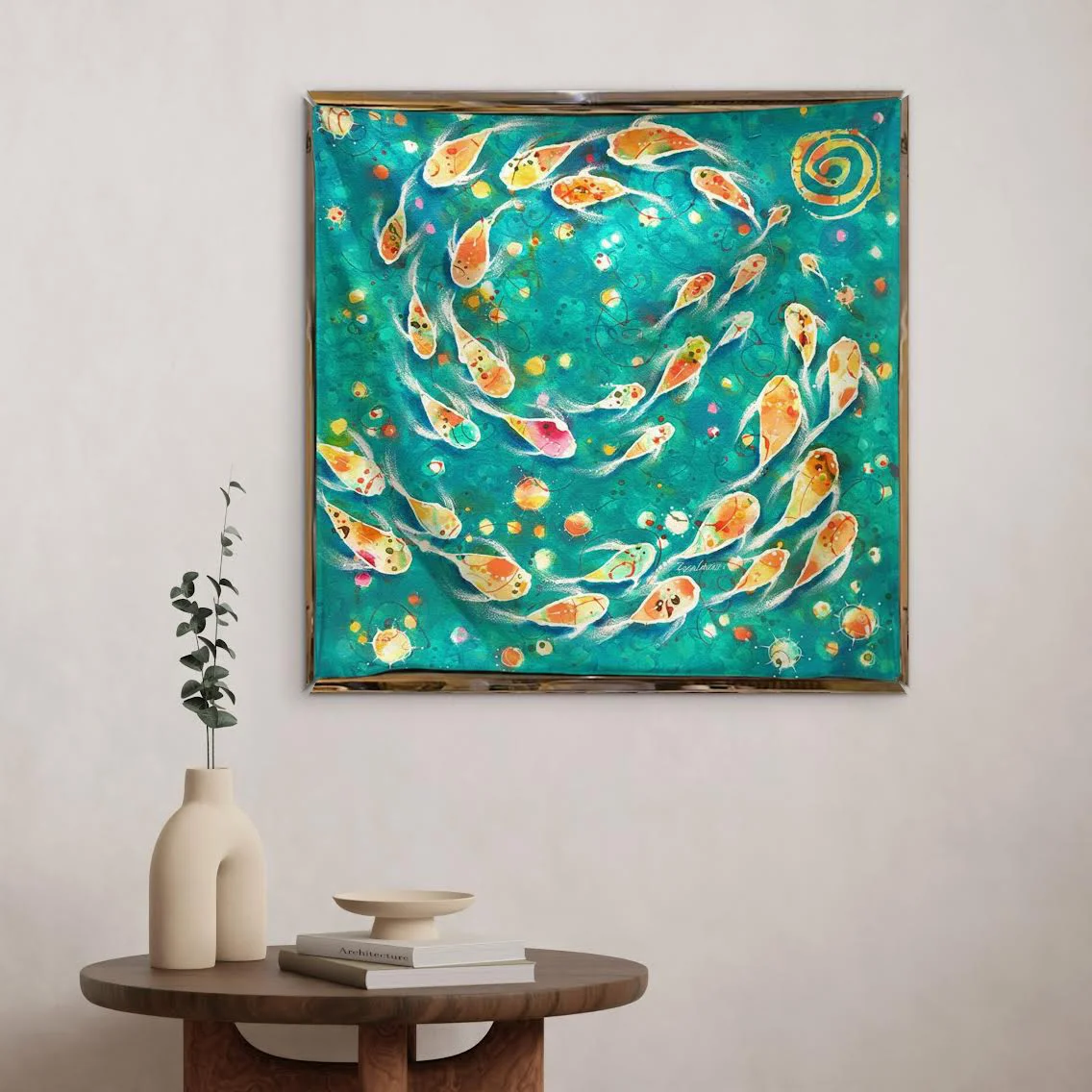
Enclosure changes the relationship
Glass framing can create a stable visual plane and a physical barrier. The framer still needs to specify glazing, spacing, textile support, attachment and reversibility. A custom frame is not automatically conservation grade because it is expensive.
Veatro leaves the textile visible as textile
ArtSoie can respond to air and reflected light when displayed in Veatro. The silk is not sealed behind glazing, and approved editions may be released according to their documentation. That access is part of the experience and part of the care responsibility.
Compare the room conditions
Open display makes direct light, dust, moisture, airflow and circulation more important. An enclosure introduces its own questions about heat, condensation, pressure and materials. Ask both providers for a written specification tied to the proposed wall.
Compare future rotation
If the collector expects to change editions or release the silk, ask who performs the change and what it costs. A fixed frame may suit permanent presentation. Veatro may suit a collector who values rotation and material movement.
Keep the decision object-specific
Inspect the actual silk and its condition before selecting either method. The right answer may differ between a new ArtSoie edition, a delicate vintage textile and a work with raised hand-finishing.
Sources and editorial notes
ArtLoft Veatro product specifications, reviewed July 2026
Canadian Conservation Institute textile display guidance
Reviewed by ArtLoft Editorial. Materially updated 2026-07-12. Read the editorial policy.